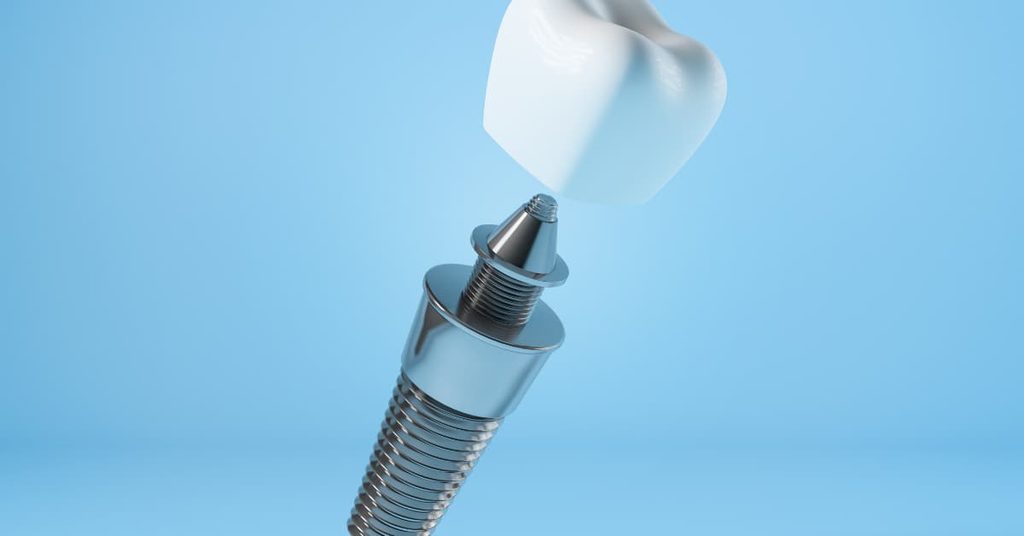
A zirconia full-arch bridge is a set of ceramic teeth screwed onto titanium implants; it’s a different thing from a ceramic implant fixture placed in the bone. What you’re choosing is the set of teeth that sits on the implants, how it’s planned, how it wears, and what it takes to fix when something goes wrong.
Hybridge full-arch restoration
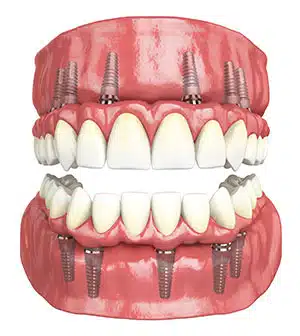
What you’re comparing: a zirconia bridge and our Hybridge Gen 4 restoration
A zirconia full-arch bridge is milled from a solid block of zirconia ceramic. A monolithic bridge is one piece, with stain and glaze added for color. Layered bridges add porcelain for a more natural look, some designs include gum-colored ceramic where tissue is missing, and others put individual zirconia crowns on a separate framework so a single tooth can be replaced. These behave differently, so when someone quotes you a zirconia bridge, ask which kind.
Our Hybridge restoration is the Gen 4 design: a chrome-cobalt bar milled to fit your arch, PMMA teeth milled from solid material and set onto the bar, and pink acrylic shaped to replace lost gum tissue. The whole piece screws onto titanium implants and stays in your mouth. The treatment sequence is on our Hybridge full-arch restoration overview, and the two tooth materials get a closer look on our PMMA vs zirconia page.
Durability: how each one wears and what repair actually involves
A full-arch bridge can stay in use for years and still need repairs along the way.
Zirconia is very hard. It wears very little against your other teeth, and a well-made monolithic bridge rarely chips. The chipping that does happen concentrates in layered designs, where the porcelain surface fractures off the zirconia beneath it. A small chip in monolithic zirconia can sometimes be smoothed or patched in the mouth, but a crack through the bridge usually can’t be repaired in a way that lasts, and the bridge is remade.
PMMA is softer, so a single tooth can chip. Because our bridge is screw-retained, we can remove it and the Hybridge lab can repair or replace that tooth on the existing framework.
When the whole set is worn, the lab strips the teeth and acrylic down to the chrome-cobalt bar and builds a new set on your original design. That reuse depends on the framework and implants being sound when we examine them; when they are, the implants stay where they are.
Screws can loosen with any fixed bridge. Retightening is often a short visit, but a screw left loose can damage the parts around it, so don’t wait on it. A cracked framework or a problem at an implant is a bigger job than a chipped tooth, with either material.
If you grind or clench, grinding is linked to higher rates of screw loosening, chipping, tooth fracture, and bridge failure in fixed full-arch bridges. Raise it at your assessment, because it affects how the bite is designed and what protection is recommended.
Appearance: planning decides more than the material does
We start at the lab with your tooth position, before anyone talks about implants. Your scans and a conversation about how you want your smile to look go to the Hybridge lab, which designs where your teeth should sit for your face and your bite.
Then we lay that design over your CBCT scan, a 3D scan of your jaw, plan implant positions that support it, and place the implants through a custom surgical guide so they land where the plan says.
That planning is what restores lip support and facial contours after years of tooth and bone loss. The pink acrylic on our restoration is shaped to replace the tissue you’ve lost, so your lips have something to rest on again.
Zirconia bridges can include gum-colored ceramic too, so tissue loss on its own doesn’t decide the material. The design has to replace the right amount of tissue at a thickness you can clean, with the teeth positioned for your face rather than around the implants.
On shade, zirconia has the edge: it holds its color, while PMMA teeth can stain over time. We manage that at your cleanings, and a lab refresh brings the teeth back to their original shade. If holding shade with minimal upkeep is your top priority, say so at the consultation.
Full-arch treatment usually includes a temporary set of teeth while the implants integrate, and that phase is where fit and appearance get checked before the final bridge is made. The shape of the palate side of upper teeth affects some speech sounds, so it’s worth checking in the temporary rather than after the final bridge is delivered.
Living with it day to day
| Daily life | Zirconia full-arch bridge | Our Hybridge restoration |
|---|---|---|
| Biting surface | Hard, rigid ceramic | PMMA teeth on a metal bar, a softer surface |
| Shade over time | Holds color | Teeth can stain over years; refreshed at the lab |
| Wear | Very little | Teeth wear with years of chewing and are rebuilt on the framework |
| Gum replacement | Gum-colored ceramic in some designs | Pink acrylic shaped to the tissue you’ve lost |
| A chipped tooth | Small chips smoothed or patched; a fracture through a one-piece bridge often means a remake | Tooth repaired or replaced on the existing framework by the lab |
| Very hard foods | Can crack ceramic | Can chip a PMMA tooth, which is repairable |
Cleaning is the same job with either bridge. A fixed bridge sits over your gums, and food and plaque collect underneath it whichever material it’s made from. Left there, they lead to inflamed tissue, odor, and over time the bone loss around implants called peri-implantitis.
So you brush, clean under the bridge daily with floss threaders or a water flosser, and keep professional visits every two to six months depending on your risk. The bridge comes off only when there’s a reason, such as disease, a mechanical problem, or hygiene access.
Want to know whether our approach fits your mouth? Request a free consultation and we’ll assess you and explain our plan.
Zirconia vs Hybridge: comparing costs
We don’t publish prices here, because a full-arch estimate depends on how many implants you need, whether teeth have to come out, whether you need grafting, and the sedation you choose. Our dental implant costs page explains the phases.
A complete estimate should list each of these, so you can put ours beside another provider’s and compare the same items:
- Consultation and 3D imaging
- Extractions and grafting, if you need them
- Implant placement, and how many implants
- Sedation
- Temporary teeth during healing
- Lab work
- The final restoration, with its material named
- How repairs, removal, and replacement are handled
Compare repair costs as well as the initial price. A fracture through a one-piece zirconia bridge can mean making a new bridge. With our Hybridge restoration, the lab can replace a damaged tooth or rebuild worn teeth on the existing framework, provided it’s still sound.
Ask each provider what those repairs would cost and what any warranty covers. A lower starting price doesn’t tell you what you’ll spend maintaining your teeth.
If you’re planning how to pay, our patient financing page lists the third-party financing companies we work with and explains insurance, HSA, and FSA questions. Approval and terms depend on the lender and your situation, and we review the options with you before treatment starts. Compare total treatment cost rather than the monthly payment.
Is our Hybridge approach right for you?
Hybridge is for people with multiple failing or missing teeth who want fixed teeth, including those ready to move on from dentures. Your health, bone and bite determine whether it’s right for you.
Dr. Gregg Hendrickson has practiced implant dentistry for more than 30 years and trains other dentists in Hybridge treatment. He’ll assess your mouth and explain what he recommends.
Henderson, Nevada
Start with a free consultation
Your visit includes a clinical exam and digital scans. We’ll explain whether Hybridge fits your needs and what treatment would involve.
Prefer to talk with us?(702) 960-1983
Frequently asked questions about zirconia implants vs Hybridge
Is zirconia better than Hybridge for full-arch implants?
Neither material is proven better across the board. Zirconia resists wear and stain better, and it’s a good choice for many patients. We chose Hybridge’s construction because it separates the structure from the teeth, so wear and chips are handled on the existing framework while the implants stay in place. Whether that approach fits your mouth is what the consultation decides.
Can a Hybridge restoration be made in zirconia?
The Hybridge lab does make a zirconia bridge as part of its product line. Our practice uses the Gen 4 chrome-cobalt and PMMA design, and that’s what we plan for and quote. If you’ve been told Hybridge is only zirconia, or only acrylic, both are incomplete. Ask any provider which construction they’re proposing and why.
What does it cost to remove or repair a fixed full-arch bridge?
It depends on what’s wrong, and a written estimate is the only figure to rely on. A chipped tooth or loose screw on our restoration is often a limited repair, provided the framework and implants are sound. A worn set of teeth means the lab rebuilds them on your framework. A fractured one-piece zirconia bridge is often a remake. A problem at an implant is a different category with either material. Before you commit anywhere, ask how each of those is priced and whether any warranty applies to them.
Which is best: zirconia, Hybridge, or All-on-4?
All-on-4 is an implant placement concept, four implants supporting a full arch, and it can carry a zirconia bridge or an acrylic one. It’s a separate question from which teeth go on top. Our Hybridge plans use at least six implants in the upper arch and five in the lower, positioned to support a tooth design made first, with grafting when the bone isn’t where we need it.
Can zirconia full-arch restorations cause bone loss?
Bone loss around implants comes mainly from peri-implantitis, which is driven by plaque under the bridge, gum health, and your overall health. Where zirconia and metal-acrylic arches have been compared directly, one retrospective study found no statistically significant difference in peri-implantitis or implant loss between the materials. That doesn’t prove the two are equal, but it means the evidence doesn’t support blaming or crediting the bridge material on its own. What lowers the risk is a bridge shape you can clean, daily cleaning underneath it, and maintenance visits on the schedule set for your risk.