The question I hear more than almost any other is some version of this: “I want implants, but I’m afraid I won’t qualify.” That fear is real, and it’s understandable. Most patients who come in for a full arch dental implant candidacy evaluation have been living with failing teeth or dentures for years. The idea that something could finally fix it – permanently – is both exciting and terrifying.
Here’s what I’ve seen after years of full-arch evaluations: most people who worry they won’t qualify actually can. Bone loss – the most common reason patients assume they’re disqualified – is often addressable. Age rarely disqualifies anyone. Most systemic health conditions can be managed with proper planning. The fear of “not qualifying” is more common than the reality of it.
This guide walks through exactly who qualifies for full arch implants, what the most common concerns are and how they’re addressed, and what the evaluation process at our office actually looks like. By the end, you’ll have a clear sense of where you stand.
What Makes a Good Full Arch Dental Implant Candidate?
When we evaluate someone for full arch dental implant candidacy, we’re looking at a combination of factors. No single factor determines the outcome on its own. It’s the complete picture that matters.
The core requirements are:
- Sufficient bone volume and density – at minimum, enough to support implant posts securely, with grafting as an option when more is needed
- Healthy or treatable gum tissue – active, uncontrolled periodontal disease must be addressed before implants are placed
- No unmanaged systemic conditions – conditions like diabetes that are actively managed don’t disqualify a patient; unmanaged conditions may require stabilization first
- Non-smoker or willingness to stop – smoking significantly increases implant failure risk and is one of the few factors that requires real behavioral change
- Realistic expectations and commitment to aftercare – implants require proper home care and follow-up; patients who understand this from the start do better
What that list doesn’t say is equally important. You don’t need perfect bone. You don’t need to be young. The bar is whether these factors can be brought into an acceptable range – not whether they’re perfect before you walk in.
Common Reasons Patients Think They Won’t Qualify – and the Solutions
When patients tell me they “probably don’t qualify,” they’re usually pointing to one of a handful of specific concerns. Most of them have solutions. Here’s what am I a candidate for dental implants actually looks like when you work through each factor.
Bone Loss and Full Arch Dental Implant Candidacy
This is the big one. When natural teeth are lost, the bone that supported them begins to resorb – the body stops maintaining bone it isn’t using. The longer teeth have been missing, the more bone loss has typically occurred.
Many patients assume this automatically disqualifies them from full arch dental implants. It doesn’t. Bone grafting can rebuild the foundation needed for implant placement. In cases of moderate bone loss, grafting is a standard part of the treatment sequence – not an obstacle to it. We cover this in detail in the bone loss section below.
Gum Disease
Active periodontal disease does need to be addressed before implants are placed. Bacteria that destroy natural tooth-supporting tissue can do the same to implants. But treated, stable gum disease is not a disqualifier.
Many full-arch patients have a history of periodontal issues. The key word is “history.” Once infection is controlled and tissue is healthy, implant placement can proceed without issue.
Diabetes
Diabetes affects healing, which matters for osseointegration – the process by which bone fuses to the implant surface. Poorly controlled diabetes significantly increases complication risk. Well-controlled diabetes, managed with medication and regular monitoring, is a different situation entirely.
Patients with stable A1c levels are routinely treated with full-arch implants. The evaluation includes a review of current control and coordination with the patient’s physician when appropriate.
Prior Failed Implants
A history of implant failure is not an automatic disqualifier. It requires understanding why the previous implant failed. The most common causes – insufficient bone, infection, premature loading – are diagnosable and addressable. A thorough 3D cone-beam CT evaluation can identify what went wrong and inform a better plan.
Medications That Affect Bone
Bisphosphonates (used to treat osteoporosis) and some other medications can affect how bone responds to implant placement and grafting. This doesn’t make implants impossible. It means the evaluation needs to include a full medication review and, in some cases, coordination with the prescribing physician. The clinical picture matters more than any single medication on a list.
Key Takeaway: Most perceived disqualifiers are not permanent barriers – they’re factors that shape the treatment sequence. The evaluation determines which category each factor falls into for your specific case.
Bone Loss and Full Arch Implant Candidacy: The Full Picture
Bone loss deserves its own section because it’s so widely misunderstood. The assumption – usually picked up from a previous dentist or online search – is that significant bone loss ends the conversation. That assumption is often wrong.
The relevant question is not “do you have bone loss?” Almost every full-arch patient does. The question is: how much bone remains, where is it, and what does that mean for the treatment sequence?
| Bone Loss Level | Typical Approach | Candidacy Impact |
|---|---|---|
| Mild | Implants placed directly – no grafting needed | ✅ Strong candidate |
| Moderate | Bone grafting prior to or at time of implant placement | ✅ Candidate with grafting |
| Significant | Advanced grafting, possible sinus lift in upper jaw | ⚠️ Candidate – extended timeline |
| Severe | Comprehensive staging plan evaluated case by case | ⚠️ Evaluated individually |
For more significant bone loss, bone grafting rebuilds the foundation before implant placement. This adds time to the overall treatment sequence – typically several months for the graft to integrate. It produces a stable base for implants that can last a lifetime.
In cases of very severe bone loss in the upper jaw, where the sinus sits close to the ridge, sinus lifts may be used alongside grafting. These are established procedures. Bone loss exists on a spectrum, and the response is a treatment plan – not a yes or no.
Age and Health: Who Qualifies for Full Arch Implants?
Two of the most common questions in consultation are “am I too old?” and “am I healthy enough?” Both are worth addressing directly.
On age: There is no upper age limit for full arch dental implants. Patients in their 70s and 80s are often excellent candidates – frequently better candidates than much younger patients, because jaw growth is complete. The relevant factor isn’t age. It’s whether bone, gum tissue, and systemic health are in a range that supports successful healing. For most older adults, they are.
On general health: You don’t need to be in perfect health. Most systemic conditions patients worry about – heart disease, high blood pressure, thyroid conditions – don’t affect full arch dental implant candidacy when managed appropriately. The evaluation includes a full health history review, and we coordinate with your physician when conditions warrant it.
The factors that do create genuine complications are unmanaged conditions: uncontrolled blood sugar, active infection, medications that significantly impair healing. “Unmanaged” is the operative word. Most of the time, those conditions can be brought under better control before treatment begins.
What the Full Arch Candidacy Evaluation at CIC Actually Looks Like
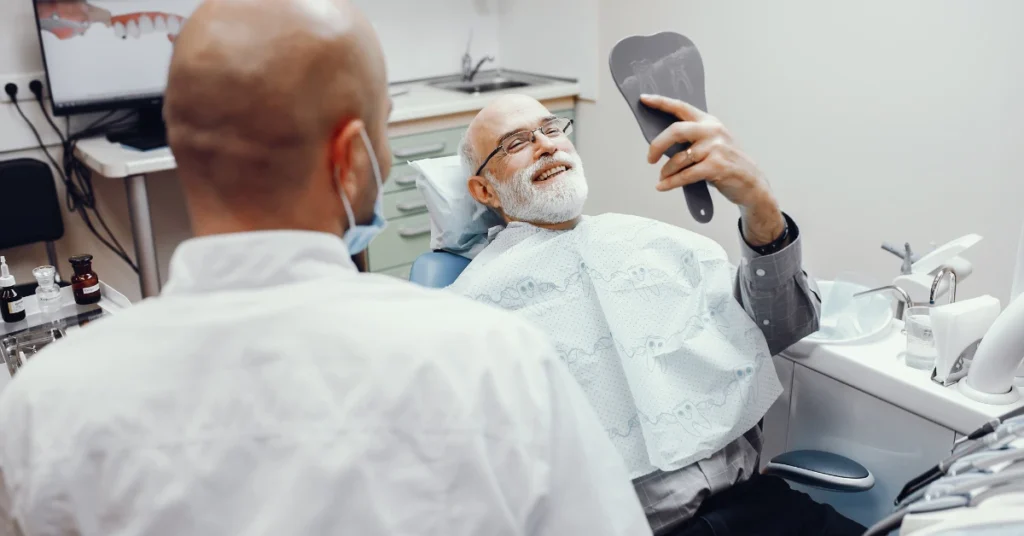
One of the reasons candidacy anxiety is so common is that patients don’t know what to expect. When the process feels like a black box, it’s easy to assume the worst. Here’s exactly what happens at a full arch evaluation at our office – step by step.
- Health history review – medical conditions, medications, prior surgeries, dental history including any previous implant experience. This is the foundation for a treatment plan specific to you, not a screening to find reasons to say no.
- 3D cone-beam CT imaging – this is where we see your actual bone: volume, density, location, and proximity to nerves and sinuses. 2D X-rays cannot provide this. The CBCT scan separates a real evaluation from guesswork.
- Periodontal and soft tissue assessment – gum health, probing depths, tissue quality. If active disease is present, we map out what needs to happen before implant placement can proceed.
- Occlusal analysis – how your bite functions matters for restoration design and how forces will be distributed across implants over time.
- Honest conversation about your options – based on everything above, we walk through what’s possible, what the treatment sequence looks like, realistic timelines, and what your path forward involves. We’re direct if something makes full arch implants inadvisable.
The evaluation is free. The goal is real information – not a sales pitch. To explore the full Hybridge system that most of our patients receive, see our overview: Hybridge full-arch restoration.
Frequently Asked Questions About Full Arch Dental Implant Candidacy
Am I a candidate for dental implants if I have significant bone loss?
Probably yes. Bone loss is one of the most common concerns patients bring to the evaluation – and one of the most addressable. Mild to moderate bone loss often doesn’t require grafting at all. For more significant cases, bone grafting rebuilds the foundation needed for secure implant placement. The 3D cone-beam CT scan tells us exactly how much bone you have and what the right approach is. Bone loss alone is rarely the final word on full arch dental implant candidacy.
Who qualifies for full arch implants when they have diabetes?
Patients with well-controlled diabetes are routinely treated with full-arch implants. The key is current control – not whether diabetes appears on your health history. Poorly managed blood sugar affects healing and osseointegration, which is why we review A1c levels and coordinate with your physician when appropriate. Most patients with managed diabetes complete full-arch treatment without complications specific to their condition. For more on what to expect, the American Academy of Implant Dentistry publishes guidelines on systemic conditions and implant candidacy.
Is there an age limit for full arch dental implants?
No. Full arch dental implants have no upper age limit. Older patients are often very strong candidates because jaw development is complete and motivation to maintain the restoration is typically high. The evaluation looks at bone quality, gum health, and systemic factors – not the number on your driver’s license. Patients in their 70s and 80s receive full-arch restorations regularly at our practice.
What if I’ve had implants fail before – can I still qualify?
Prior implant failure doesn’t close the door. What matters is understanding why the previous implant failed – infection, insufficient bone, premature loading, or other factors. Each cause has a clinical explanation and most have solutions. A thorough evaluation including 3D imaging can identify what went wrong and inform a treatment plan that addresses those specific factors. Many patients who experienced single-implant failure go on to have successful full-arch restorations.
How long does the full arch candidacy evaluation take?
The initial consultation and imaging typically take one to two hours. That includes the health history review, CBCT scan, periodontal assessment, and the conversation about findings and options. The evaluation is the foundation of the entire treatment plan – we don’t rush it. The consultation at our office is free, and you’ll leave with a clear picture of your full arch dental implant candidacy and what the path forward looks like.
Find Out Where You Actually Stand – Free Evaluation
The anxiety around full arch dental implant candidacy is real – and almost always based on incomplete information. Most patients who come in convinced they won’t qualify leave with a treatment plan. The evaluation is where the guessing ends and the actual answers begin.
If you’ve been putting off the conversation because you’re afraid of what you might hear, that’s exactly why it’s worth having. The worst outcome is more information. The best outcome is a clear path to a permanent, fixed restoration that lets you eat what you want, speak without worry, and stop thinking about your teeth entirely.
Learn more about your options at our full arch dental implants page, or schedule your free evaluation at our Henderson or Las Vegas office today.