Understanding dental implant costs is crucial for patients seeking this revolutionary tooth replacement solution that has transformed modern dentistry.
While dental implants offer a permanent, natural-looking solution for missing teeth that can last a lifetime with proper care, many patients find themselves confused by the wide range of pricing they encounter when researching this gold-standard treatment option.
Understanding dental implant costs involves more than just looking at the initial price tag. From geographic location to material choices, numerous factors influence the final investment you’ll make in your smile.
For those seeking exceptional dental implant services, Comprehensive Dental Implant Center stands out as a premier provider, offering transparent pricing and comprehensive treatment options tailored to each patient’s unique needs.
Key Takeaways:
- Average Dental Implants Cost: Single implants range from $1,500-$6,000, while full mouth restorations can cost $30,000-$60,000 or more
- Cost Variables: Material type, location, provider experience, and additional procedures significantly impact final pricing
- Financing Solutions: Multiple payment options, insurance coverage, and financing plans make implants more accessible
- Long-term Value: Despite higher upfront costs, implants offer superior durability and functionality compared to alternatives
- Hidden Expenses: Understanding itemized breakdowns helps avoid unexpected costs during treatment
Understanding Average Dental Implants Cost in 2025
The dental implant cost landscape varies significantly across the United States, creating a complex pricing structure that patients must navigate.
Understanding typical price ranges helps set realistic expectations for your investment:
- Single Tooth Replacement: $1,500 to $6,000 per implant (including implant, abutment, and crown)
- Multiple Teeth (2-3 implants): $3,000 to $15,000 depending on configuration and materials
- Full Arch Restoration: $15,000 to $30,000 per arch using All-on-4® technique
- Complete Full Mouth: $30,000 to $60,000 or more for both upper and lower arches
This substantial price range reflects the complexity and customization involved in each procedure, as well as regional differences in overhead costs and market demand.
Advanced techniques like All-on-4® implants provide exceptional value by delivering a full set of teeth using just four strategically placed implants per arch, reducing both cost and healing time.
The wide variation in dental implant cost stems from several key factors that affect both the complexity of treatment and the quality of materials used.
Understanding these variables helps patients make informed decisions about their dental care investment while avoiding unexpected expenses during treatment.
Core Factors That Influence Dental Implant Costs
Type of Implant Material and Design
The choice between titanium and zirconia implants significantly impacts the overall dental implant cost. Understanding your material options helps you make informed decisions about both aesthetics and budget:
- Titanium Implants: $1,500-$4,000 per implant – The traditional gold standard offering exceptional biocompatibility, proven longevity, and more accessible pricing
- Zirconia Implants: $2,500-$6,000 per implant – A newer, aesthetically superior option with white color and metal-free composition, commanding premium pricing due to advanced manufacturing
One-piece versus two-piece implant systems also affect pricing, with single-piece implants often requiring less surgical time but potentially limiting future restoration options.
Your dental provider will recommend the most appropriate system based on your specific anatomical needs and aesthetic goals.
Number of Implants Required for Your Treatment
Single-tooth replacement represents the most straightforward scenario for calculating dental implant cost, while multiple missing teeth may benefit from implant-supported bridges that can reduce the total number of implants needed.
Full-arch restorations utilize techniques like All-on-4® to maximize efficiency and minimize cost while providing comprehensive tooth replacement.
The strategic placement of implants can significantly impact both the treatment timeline and overall investment, making consultation with an experienced implant specialist crucial for developing the most cost-effective treatment plan.
Geographic Location Impact on Dental Implants Cost
Urban centers typically command higher prices for dental implant procedures due to increased overhead costs, higher demand, and a greater concentration of specialized providers.
Rural areas may offer more competitive pricing but potentially limited access to the latest technology or specialized expertise.
Regional variations can result in price differences of 20-30% or more for identical procedures, making location a significant factor in treatment planning. However, patients should balance cost considerations with provider expertise and convenience factors when making their decision.
Experience and Specialization of Your Dental Provider
The dental implant costs often reflect the provider’s level of training, experience, and specialization in implant dentistry.
Board-certified oral surgeons or periodontists typically charge premium rates due to their advanced training and expertise in complex cases, while general dentists may offer more competitive pricing for straightforward procedures.
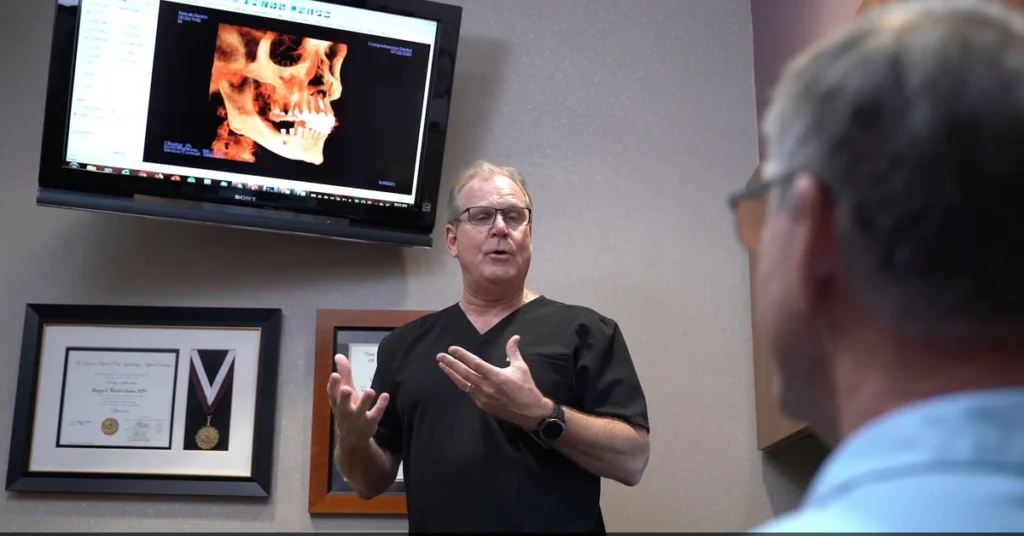
Advanced technology investments, such as 3D imaging systems, digital treatment planning software, and guided surgery techniques, may increase treatment costs but often result in more predictable outcomes and improved patient comfort.
Additional Procedures That Affect Dental Implant Cost
Many patients require preparatory procedures before implant placement, which can significantly impact the total investment.
Bone grafting procedures, necessary when insufficient jawbone exists to support an implant, typically add $500 to $3,000 to the overall treatment cost, depending on the extent of grafting required.
Sinus lift procedures, needed for upper jaw implants when the sinus cavity extends too low, represent another potential additional expense. These preparatory treatments, while increasing the initial investment, are essential for ensuring long-term implant success and stability.
Hidden Costs and Itemized Breakdown of Dental Implants Cost
Understanding the complete financial picture requires examining all components that contribute to the final dental implant cost.
Many practices structure their pricing to include multiple phases of treatment, which can make initial cost estimates appear lower than the final investment.
The implant fixture itself represents just one component of the total cost. Here’s what a typical itemized breakdown might include:
- Initial Consultation & Diagnostics: $100-$300 (X-rays, CT scans, treatment planning)
- Implant Fixture: $1,000-$3,000 (the titanium or zirconia post placed in the jawbone)
- Abutment: $300-$700 (connector piece between implant and crown)
- Crown Restoration: $800-$1,500 (custom-made tooth replacement)
- Surgical Placement Fee: $500-$1,500 (procedure and follow-up visits)
- Sedation/Anesthesia: $200-$600 (if required for comfort)
Some practices quote all-inclusive pricing, while others itemize each component separately. Patients should request detailed breakdowns to understand exactly what services are included in their treatment estimate and what additional costs they might encounter during the treatment process.
Insurance Coverage Limitations for Dental Implants Cost
Most traditional dental insurance plans classify implants as elective or cosmetic procedures, resulting in limited or no coverage for the implant portion of treatment. However, many plans do provide benefits for crown restoration, which can help offset some of the overall dental implant costs.
Medical insurance may occasionally provide coverage when tooth loss results from an accident or medical necessity, but patients should verify coverage details with their insurance provider before beginning treatment.
Pre-authorization requests can help clarify exactly what portions of treatment may be covered under existing plans.
The classification of implants as restorative rather than cosmetic continues to evolve, with some insurance companies beginning to recognize their medical necessity for maintaining proper oral function and preventing bone loss.
Financing and Payment Options for Dental Implants Cost
Comprehensive Dental Implant Center understands that single and full-arch dental implant costs represent a significant investment, offering multiple financing solutions to make treatment accessible.
Here are the most popular payment options available:
- In-House Payment Plans: Spread costs over several months with 0% interest, making quality implant care more manageable
- Third-Party Financing (CareCredit): Extended payment terms with 12-24 month interest-free periods for qualified applicants
- HSA/FSA Accounts: Tax-advantaged payment options that effectively reduce net costs by your marginal tax rate
- Insurance Benefits: Many plans cover crown portions, potentially saving $800-$1,500 per implant
- Package Deal Discounts: Special pricing for multiple implants or full-arch restorations
These financing options ensure that dental implant costs don’t prevent you from receiving the quality care you deserve. Patients should discuss all available options during their consultation to find the most suitable payment solution.
Comparing Alternatives: Understanding Long-Term Value Beyond Initial Dental Implants Cost
While the upfront dental implant costs may seem substantial compared to alternatives like dentures or bridges, the long-term value proposition often favors implants significantly.
Traditional dentures require regular adjustments, relines, and eventual replacement, with ongoing costs that can exceed the initial implant investment over time.
Dental bridges, while less expensive initially, typically require replacement every 10-15 years and may compromise adjacent healthy teeth during preparation. Implants, designed to last a lifetime with proper care, eliminate these recurring expenses while providing superior function and comfort.
The prevention of bone loss represents another significant value factor, as implants stimulate natural bone preservation that helps maintain facial structure and prevents the need for future bone grafting procedures.
Essential Questions to Ask About Dental Implant Cost Before Treatment
Before committing to implant treatment, patients should request comprehensive cost breakdowns that detail every aspect of their procedure.
Understanding what services are included in quoted prices helps avoid unexpected expenses and allows for accurate comparisons between providers.
Provider experience and success rates directly impact treatment outcomes and long-term value, making these important factors to evaluate alongside cost considerations. Warranty policies and guarantees provide additional protection for your investment and demonstrate provider confidence in their work.
Timeline expectations and recovery requirements can affect both direct costs and indirect expenses like time off work, making these important factors in treatment planning and budgeting decisions.
Maximizing Your Investment: Long-Term Value of Dental Implants Cost
The dental implant cost represents an investment in both oral health and overall quality of life that extends far beyond the initial financial commitment. Here’s how implants provide lasting value:
- Enhanced Nutrition: Restored chewing function allows you to enjoy a complete diet, supporting better overall health and potentially reducing medical expenses
- Professional Confidence: A natural-looking smile positively affects career opportunities and workplace interactions
- Social Comfort: Eliminates embarrassing slippage or clicking sounds that can affect speech and social situations
- Bone Health: Prevents jawbone deterioration that occurs with missing teeth, maintaining facial structure
- No Ongoing Replacements: Unlike dentures or bridges, implants are designed to last a lifetime with proper care
Comprehensive Dental Implant Center’s commitment to long-term patient success ensures that your implant investment provides maximum value through careful treatment planning, quality materials, and ongoing support throughout the healing and maintenance process.
Hybridge vs Zirconia vs All-on-4: What the Estimate Should Show
The price makes more sense when you compare the whole treatment system. A low number can look appealing at first, then become less useful once you ask about imaging, temporary teeth, final teeth, maintenance visits, and repair policies.
That matters most for full-arch treatment. Patients comparing Hybridge full-arch restoration, zirconia, and All-on-4-style care should ask what the final bridge is made from, how often maintenance is expected, and what happens if part of the restoration wears down or chips.
| Cost question | Hybridge full-arch restoration | Zirconia bridge | All-on-4-style plan |
|---|---|---|---|
| What is included? | Ask whether surgery, temporary teeth, and the final bridge are all part of the quote. | Ask whether the zirconia bridge is final or provisional, and what lab work is included. | Ask whether the quote covers only implant placement or the full restored smile. |
| How are repairs handled? | PMMA teeth over a chrome cobalt framework may allow more practical repair options. | Zirconia is strong, but major repairs can be more involved. | Repair cost depends on the material, lab, and whether the bridge is temporary or final. |
| What happens each year? | Ask about hygiene visits, follow-up care, and whether bridge removal is expected. | Ask how the restoration is cleaned and checked over time. | Ask whether maintenance is handled by the implant office, a general dentist, or both. |
Start with one question
Ask, “Is this estimate for the whole treatment, or only one phase?” That one question usually separates a useful estimate from a confusing one.
How to Compare Long-Term Cost
Dental implant cost is not just the surgery fee. It is the cost of getting teeth that work, keeping them clean, repairing them when needed, and knowing who is responsible if something changes. For larger cases, compare the written estimate against the full scope on CIC’s full-arch dental implants page.
Before treatment
Consultation, 3D imaging, extractions, grafting, and temporary teeth can all affect the quote.
During treatment
Implant placement, sedation, lab work, and the final restoration should be listed clearly.
After treatment
Maintenance visits, repair policies, and replacement terms matter more than most people expect.
Financing Dental Implant Costs
Many implant patients finance at least part of treatment because full-arch care is usually planned as a major health expense, not a routine dental bill. Financing can help, but only after the treatment plan itself is clear.
Questions to ask before comparing monthly payments
- Does the estimate include temporary teeth and final teeth?
- Are imaging, sedation, grafting, or extractions listed separately?
- How often are follow-up and hygiene visits expected?
- What repair or replacement costs could come up later?
FAQs About Dental Implant Costs
What is the average dental implant cost for a single tooth replacement?
A single dental implant often falls between $1,500 and $6,000, depending on the provider, implant system, restoration, and whether you need extra treatment first. Bone grafting, imaging, sedation, or a custom abutment can change the final number.
Does dental insurance cover any portion of dental implant costs?
Sometimes. Many dental plans limit implant coverage, but they may cover part of the crown, extraction, or related treatment. Medical coverage may apply in limited cases tied to trauma or medical need. Ask for a benefits check before comparing final estimates.
How do dental implants compare with dentures or bridges over time?
Implants usually cost more upfront. Over time, dentures and bridges may need relines, replacement, repairs, or changes as the mouth shifts. The better comparison is the full cost over several years, not only the first appointment.
Are there financing options for dental implant costs?
Yes. CIC can discuss payment and financing options during the consultation. Before comparing monthly payments, make sure each estimate includes the same treatment phases, final teeth, maintenance expectations, and possible add-on procedures.
Why do Hybridge, zirconia, and All-on-4 prices differ?
They may use different materials, lab processes, implant counts, temporary teeth, final restorations, and maintenance plans. A fair comparison starts with the full treatment scope, not the lowest advertised number.
Can zirconia cost more to maintain?
It can, depending on the case. Zirconia is strong, but repairs or replacement can be more involved when a bridge chips or needs major adjustment. Ask how cleanings, removal visits, and future repairs are handled.
Does Hybridge change the long-term cost equation?
It can. Hybridge uses a planned full-arch system, and its repair economics may differ from solid zirconia or temporary acrylic options. Ask how PMMA teeth, the framework, lab support, and follow-up care affect ownership cost.
Should I choose the lowest dental implant cost estimate?
Not until you know what is included. A lower estimate may leave out imaging, sedation, temporary teeth, final teeth, maintenance, or repair policies. A complete written estimate is more useful than a headline price.
Ready to Compare Your Dental Implant Cost Options?
Bring your questions about materials, phases, financing, and maintenance. CIC can review your options and give you a written estimate based on your actual treatment plan.
Schedule Your Free Consultation
(702) 960-1983 | Open Weekdays | Henderson & Las Vegas