You’ve been told you need full-arch tooth replacement, and now you’re weighing two options that sound nearly identical: dental implants vs implant-supported dentures. Both use implant posts. Both restore your smile. But choosing the wrong one could mean years of unnecessary compromise – or spending far more than you needed to.
Here’s the direct answer: fixed full-arch dental implants are permanently attached to your jaw and function like natural teeth. Implant-supported dentures are removable prosthetics anchored by implants rather than suction. One is a permanent solution. The other is a significantly better version of traditional dentures.
The terminology overlaps, the marketing blurs the lines, and too many patients end up in the wrong treatment because they never got a straight comparison. This guide gives you that comparison – honest and side-by-side – so you can make the right call for your situation.
What Are Fixed Full-Arch Dental Implants?
Fixed full-arch implants – often called All-on-4, All-on-X, or Hybridge – replace an entire arch of missing teeth with a permanent prosthetic that is surgically attached to your jawbone. The restoration does not come out. You brush it, floss around it, and live with it exactly like natural teeth.
The procedure involves placing four to six titanium implant posts into the jawbone. A custom-fabricated bridge is then permanently secured to those posts. Once healed, the result is a full arch of teeth that look, feel, and function as close to natural as modern dentistry can achieve.
Rather than placing an individual implant for every missing tooth, the full-arch method uses strategically angled implants to support an entire arch. This reduces the number of surgical sites, often eliminates bone grafting, and allows many patients to leave with temporary teeth on the day of their procedure.
Key characteristics of fixed full-arch implants:
- Permanently attached – cannot be removed at home
- Stimulates jawbone to prevent bone loss over time
- No palate coverage – full taste and sensation retained
- Biting force closely matches natural teeth (200-250 PSI)
- No adhesives, soaking, or nightly removal required
- Lifespan of 20+ years with proper care
At NV Implant Center, our full-arch dental implants use the Hybridge protocol – a system built around precision planning, same-day teeth, and long-term durability.
What Are Implant-Supported Dentures?
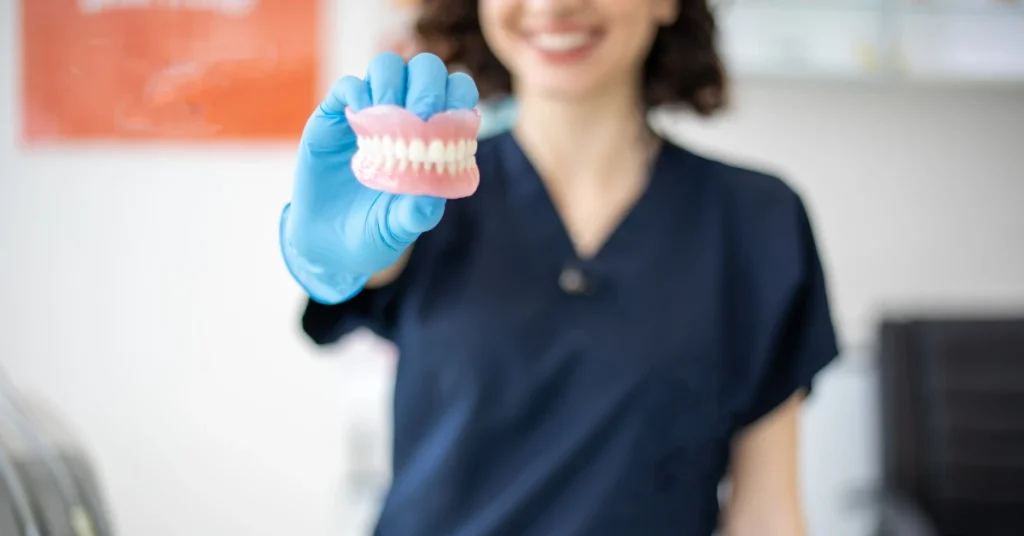
Implant-supported dentures are a removable prosthetic that snaps onto implant posts rather than relying on suction or adhesive. You still take them out at night. You still clean them separately. But they are dramatically more stable than conventional dentures because implants anchor them firmly throughout the day.
The procedure typically involves placing two to four implant posts in the jaw. The denture uses attachment fittings – often ball-and-socket or bar-clip systems – that click onto those posts. The result is a denture that doesn’t float, slip, or require messy adhesive while you eat and talk.
This option was developed for patients who need a more affordable path to implant-level stability but aren’t ready for – or don’t yet qualify for – a fixed permanent restoration. It bridges the gap between conventional dentures and full-arch implants in both cost and function.
Key characteristics of implant-supported dentures:
- Removable – snaps on and off for cleaning
- Far more stable than traditional dentures during daily use
- Requires fewer implants than fixed options (typically 2-4)
- Lower upfront cost than full-arch fixed implants
- May cover the palate depending on design
- Requires nightly removal and separate cleaning
- Attachment clips need periodic replacement (every 1-2 years)
Our implant-supported dentures at NV Implant Center are a genuine step up from conventional dentures for budget-conscious patients who want implant stability without the full-arch investment.
Dental Implants vs Implant-Supported Dentures: Side-by-Side Comparison
| Feature | Fixed Full-Arch Implants | Implant-Supported Dentures |
|---|---|---|
| Removable? | No – permanently fixed | Yes – snaps on and off |
| Implants needed | 4-6 per arch | 2-4 per arch |
| Bone preservation | Full stimulation – prevents bone loss | Partial – limited stimulation |
| Palate coverage | None | Often yes (depends on design) |
| Biting force | Near-natural (200-250 PSI) | Reduced (limited by fit) |
| Daily maintenance | Brush and floss like natural teeth | Remove, soak, and clean nightly |
| Adhesives needed? | No | No (implants hold it) |
| Hardware wear | Not applicable | Clips/snaps replaced every 1-2 years |
| Prosthetic lifespan | 20+ years (implants can be lifetime) | 5-7 years per prosthetic |
| Best for | Patients wanting permanent, natural function | Budget-conscious patients wanting daily stability |
Cost Comparison: Dental Implants vs Implant Dentures
Cost is often the deciding factor – and it’s worth being direct about what you’re looking at with each option.
Fixed full-arch implants carry a higher upfront investment. A single arch using the Hybridge or All-on-4 protocol typically ranges from $20,000 to $30,000 depending on case complexity, materials, and whether any pre-surgical preparation is needed. Both arches generally fall between $35,000 and $55,000.
Implant-supported dentures cost significantly less upfront – typically $3,000 to $6,000 per arch, factoring in both the implants and prosthetic. This lower entry point makes them accessible to patients who need implant stability but are working within tighter financial constraints.
Here’s what most patients don’t calculate: long-term cost.
Implant-supported dentures need replacement prosthetics every five to seven years. The attachment mechanisms wear out and need servicing every one to two years. Over a 20-year span, the cumulative cost often rivals – or exceeds – the original investment in a fixed full-arch solution.
💡 20-Year Cost Reality Check
Implant-supported dentures may cost less upfront, but factor in 3-4 prosthetic replacements plus annual hardware servicing over two decades. Many patients find the long-term numbers closer than they expected. For a full breakdown, visit our dental implant costs page.
Who Is a Candidate for Each Option?
Not every patient qualifies for both treatments, and candidacy depends on more than preference or budget. Here’s a clear breakdown of who each option is designed for.
Fixed full-arch implants are the right fit for patients who:
- Have lost most or all teeth in one or both arches
- Have adequate jawbone density to support implant posts (or can build it up with grafting)
- Are in good overall health without uncontrolled diabetes or active periodontal disease
- Want a permanent solution and are prepared to invest in it
- Are nonsmokers, or willing to stop smoking before and after surgery
Implant-supported dentures are a better fit for patients who:
- Currently wear conventional dentures and want improved day-to-day stability
- Have experienced significant bone loss that makes full-arch placement more complex
- Have budget constraints that put fixed implants out of reach right now
- Are comfortable removing and cleaning a prosthetic each night
- Have health factors that limit the extent of oral surgery appropriate for them
Some patients are excellent candidates for both options – the decision comes down to lifestyle and finances. Others have bone density or health considerations that point clearly in one direction. That’s exactly why a clinical evaluation matters before committing to either path.
✓ Quick Candidacy Self-Check
You may be a strong candidate for fixed full-arch implants if you answer yes to these:
- I am missing most or all teeth in one or both arches
- I do not have uncontrolled systemic health conditions
- I am a nonsmoker or willing to quit for treatment
- I want a permanent result I never have to remove
- I understand this is a long-term investment in my health
A free consultation with imaging will give you a definitive answer.
Implant Dentures vs Fixed Implants: Which Is Right for You?
When patients ask whether implant dentures are as good as fixed implants, the honest answer is this: they serve different patients with different needs. “Better” depends entirely on what you’re optimizing for.
Fixed full-arch implants are the premium permanent solution. They preserve bone, restore near-natural function, require no nightly removal, and last a lifetime with proper care. According to the American Academy of Implant Dentistry, dental implants have a success rate above 95% and are the gold standard for permanent tooth replacement. For patients who qualify, they are the closest thing to getting your original teeth back.
Implant-supported dentures are a meaningful upgrade over conventional dentures. They eliminate slipping, remove the need for adhesive, and provide day-to-day stability that conventional dentures simply can’t match. For patients who need a budget-conscious path to better function, they are a real and worthwhile solution.
The question to sit with: what is your daily experience worth to you? Permanent teeth you never think about – or a removable prosthetic that works better than what you have now?
Both are legitimate answers. The right one depends on your jaw, your health, your budget, and your goals.
Frequently Asked Questions
Are implant-supported dentures as good as fixed dental implants?
Implant-supported dentures are significantly better than conventional dentures, but they don’t replicate the function of fixed full-arch implants. Fixed implants are permanently attached, preserve bone, and provide near-natural biting force. Implant dentures are removable, offer less bone stimulation, and require more daily maintenance. For patients who qualify, fixed implants deliver a higher quality of daily life over the long term.
Can I switch from implant-supported dentures to fixed implants later?
In many cases, yes. Some patients start with implant-supported dentures and transition to a fixed restoration as circumstances allow. Whether that’s possible depends on the bone volume you retain and the placement of your existing implants. A clinical evaluation will show whether your current implants can support a fixed prosthetic, or whether additional posts would be needed.
What’s the difference between implant dentures and fixed implants when eating?
Fixed full-arch dental implants restore biting force close to natural levels, allowing most patients to eat the same foods they enjoyed before tooth loss. Implant-supported dentures improve on conventional dentures considerably – most foods are manageable – but biting force remains lower and very hard or sticky foods may still pose challenges depending on prosthetic fit.
How do I know which option my jawbone can support?
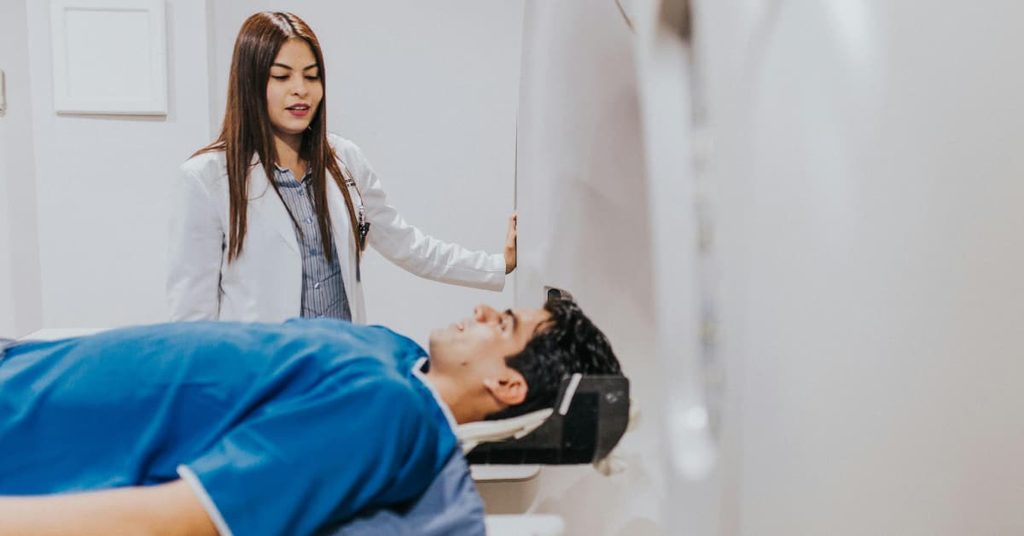
Bone density and volume are assessed through a CBCT scan – a 3D cone beam image that shows the precise anatomy of your jaw. This imaging reveals whether you have sufficient bone for implant placement without grafting, or whether bone augmentation would be needed first. This evaluation is included in our free consultation at NV Implant Center.
Schedule Your Free Consultation at NV Implant Center
When comparing dental implants vs implant-supported dentures, the right answer comes down to your jaw, your health, and your goals. Fixed implants offer permanent function and lifelong bone preservation. Implant-supported dentures offer stability and affordability for patients who need a different starting point.
Neither decision should be made without a clinical evaluation. At NV Implant Center in Henderson, NV, we offer a free consultation that includes imaging review, a full candidacy assessment, and a direct conversation about what each option would look like for your specific case – no pressure, no obligation.
Ready to Find Out Which Option Is Right for You?
Get a free consultation with imaging included. No obligation. No pressure. Just answers.
Schedule Your Free Consultation
📞 (702) 960-1983 | Open Weekdays | Henderson & Las Vegas