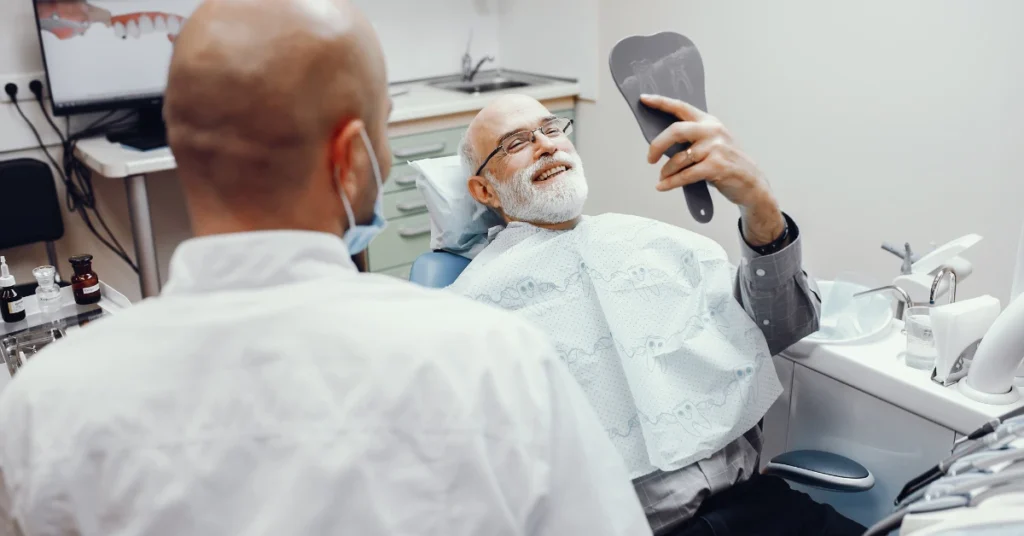
In two decades of implant dentistry, I’ve learned that preventing peri-implantitis is far easier than treating it. Most patients who develop this condition never saw it coming – they thought occasional bleeding around their implant was normal, or they skipped a few professional cleanings because the implant felt fine.
Peri-implantitis is an inflammatory condition that affects the tissues and bone surrounding your dental implant. Unlike peri-implant mucositis – the early, reversible stage affecting only soft tissues – peri-implantitis involves progressive bone loss that can eventually lead to implant failure. Current data shows about 21-25% of implant patients develop this condition, making it the leading cause of late implant failure.
Here’s what concerns me most: peri-implantitis often progresses faster than gum disease around natural teeth because implants lack the protective periodontal ligament that helps natural teeth resist bacterial invasion. By the time patients notice symptoms severe enough to seek treatment, significant bone loss may have already occurred.
But here’s the encouraging news – peri-implantitis is largely preventable. Understanding the warning signs, knowing your risk factors, and maintaining proper care can protect your implant investment. Let me walk you through what causes this condition, how to recognize it early, and what you can do to prevent it.
Understanding the Difference: Peri-Implant Mucositis vs. Peri-Implantitis

When patients ask, “Is bleeding around my implant normal?” the answer depends on whether we’re dealing with mucositis or peri-implantitis. These are two stages of the same disease, but the distinction matters for treatment and prognosis.
Peri-implant mucositis is reversible inflammation of soft tissues around your implant – similar to gingivitis. The bone remains intact. With improved hygiene and professional treatment, tissues can return to health.
Peri-implantitis occurs when inflammation extends deeper, attacking the bone. Once bone loss begins, we can’t fully restore what’s been lost. We can stop progression and sometimes rebuild some bone, but it requires intensive treatment.
Here’s the critical comparison:
- Peri-implant mucositis – Affects only soft tissues. Symptoms include redness, swelling, and bleeding when brushing. No bone loss on X-rays. Completely reversible with treatment.
- Peri-implantitis – Involves soft tissue inflammation and progressive bone loss. All mucositis signs plus possible pus, deeper pockets (6mm or more), and bone loss of 3mm or more on X-rays. Requires intensive treatment.
- Timeline – Mucositis can develop within months of poor hygiene. Progression to peri-implantitis varies but can occur within 1-2 years. Peri-implantitis then progresses faster than natural tooth periodontitis.
- Treatment response – Mucositis responds well to professional cleaning and improved home care. Peri-implantitis often requires surgical intervention, surface decontamination, and possibly bone grafting.
Catching inflammation at the mucositis stage prevents bone loss. Don’t ignore even minor bleeding.
Early Warning Signs You Shouldn’t Ignore
The challenge with peri-implantitis is that early symptoms feel minor – easy to dismiss or attribute to something temporary. I’ve had patients come in with advanced bone loss who insist they “only noticed a little bleeding last week.” In reality, their body had been sending warning signals for months.
Here are the signs that should prompt an immediate call to our office:
- Bleeding when brushing or flossing – This is never normal around a healthy implant. If you see blood on your toothbrush or floss around the implant crown, the tissues are inflamed. Even occasional bleeding deserves evaluation.
- Swollen or red gums – Healthy tissue around implants should look pale pink and firm. If the gums appear puffy, red, or shiny around your implant, inflammation is present. Compare the tissue around your implant to your natural teeth – if there’s a noticeable difference, that’s concerning.
- Persistent bad taste or odor – A metallic or foul taste near the implant, or breath odor that doesn’t improve with brushing, can indicate bacterial infection. This often accompanies more advanced peri-implantitis.
- Gum recession exposing the implant – If you can see more of the implant post or abutment than when it was first placed, the gum tissues are receding. This happens as inflammation causes tissue destruction and bone loss.
- Pain or discomfort when chewing – Once healed, implants shouldn’t hurt during normal function. Pain when biting down, especially if it’s worsening over time, may indicate bone loss or inflammation affecting implant stability.
- Pus or discharge – Any white, yellow, or grey discharge around the implant is a clear sign of active infection. You might notice this when pressing on the gum tissue or see it spontaneously.
- Feeling of looseness – A healthy implant feels completely solid. Any sense of movement, even slight, indicates that significant bone loss has occurred. This is an advanced sign requiring immediate attention.
Don’t wait for multiple symptoms to appear. Even one persistent warning sign warrants professional evaluation. Early intervention when we’re still dealing with mucositis can prevent progression to full-blown peri-implantitis.
What Causes Peri-Implantitis?
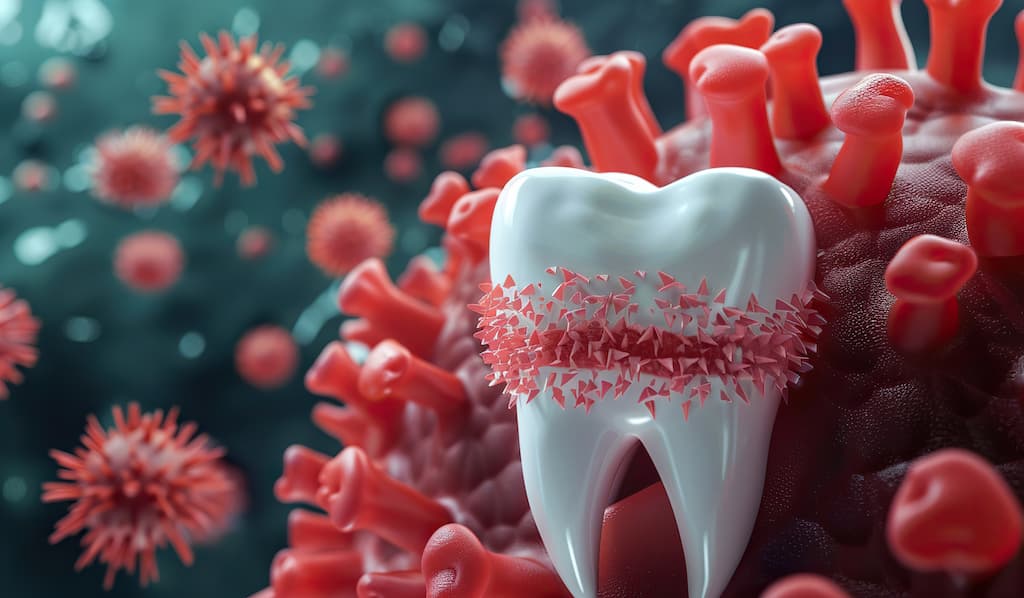
Peri-implantitis results from bacterial biofilm accumulation combined with individual risk factors that affect how your body responds to that bacteria.
Bacterial Biofilm – The Primary Culprit
Like natural teeth, implants attract bacteria that form sticky biofilm. Without regular removal, this biofilm mineralizes into calculus and harbors harmful bacteria. Implant surfaces – especially threaded portions – provide more hiding places for bacteria than smooth tooth enamel. When biofilm accumulates around the implant collar, it triggers inflammation that can progress from mucositis to bone-destroying peri-implantitis.
Risk Factors That Increase Your Vulnerability
- History of periodontitis – The strongest predictor. If you lost teeth to gum disease, you’re 3-4 times more likely to develop peri-implantitis. The same bacterial susceptibility and immune response patterns can affect implants.
- Poor oral hygiene – The most modifiable risk factor. Inadequate daily cleaning around implants significantly increases peri-implantitis rates. The implant threads and crown junction require careful daily cleaning.
- Smoking – Reduces blood flow, impairs healing, and allows harmful bacteria to colonize surfaces. Smokers have 3.6 to 4.6 times higher risk compared to non-smokers.
- Diabetes – Poorly controlled diabetes (HbA1c above 8%) significantly increases risk. High blood sugar impairs immune function and healing. Well-controlled diabetes poses minimal additional risk.
- Infrequent professional maintenance – Patients attending fewer than two maintenance visits per year have 86% higher risk. Regular cleanings remove calculus you can’t eliminate at home.
- Ill-fitting restorations – Poorly fitting crowns create gaps where bacteria accumulate and can make cleaning difficult or impossible.
- Excess cement remnants – Cement that remains below the gum line acts as a bacterial magnet. This is why many dentists prefer screw-retained crowns.
- Lack of keratinized tissue – Implants surrounded by thin, movable tissue rather than thick, attached tissue are more prone to inflammation.
Most patients have multiple risk factors. The more you have, the more important prevention becomes.
Why Implants Are More Vulnerable to Infection
Patients often assume implants are less prone to problems than natural teeth. But when it comes to infection, implants face unique challenges.
Natural teeth have a periodontal ligament – fibers that attach the root to bone, containing blood vessels that deliver immune cells and act as a physical barrier, slowing bacterial penetration. Implants integrate directly with bone through osseointegration, which provides stability but means no ligament, no buffer zone, and reduced blood supply around the implant.
This means:
- Faster bacterial progression – Without the ligament barrier, bacteria reaching below the gum line can access bone more quickly. What might take years in natural tooth periodontitis can happen in months with peri-implantitis.
- Less robust immune response – Reduced blood supply means fewer immune cells reach the area. Your body’s natural defense is weaker at implant sites.
- Different bacterial profile – Implants attract different bacterial species and often harbor more aggressive pathogens. The titanium surface creates unique bacterial niches.
- Circular attachment vulnerability – Gum tissue attaches around the circular implant differently than around complex tooth roots. This seal is more easily disrupted.
This doesn’t mean implants are inferior – they’re incredibly successful when properly maintained. They just require dedicated attention that “good enough” hygiene can’t provide.
Treatment Options: From Non-Surgical to Surgical Intervention
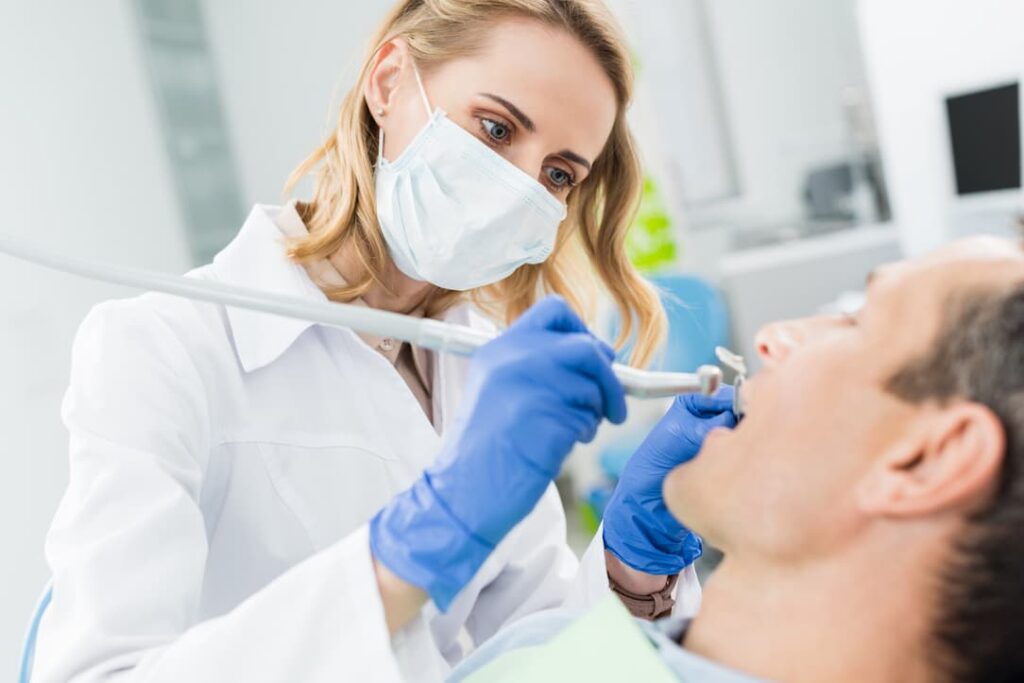
Treatment success depends on early detection and appropriate intervention. I always start with the least invasive approach.
Non-Surgical Treatment – The First Line
- Mechanical debridement – Using specialized plastic or titanium instruments, we remove bacterial deposits and calculus from the implant surface. Metal instruments can damage implant coatings.
- Antimicrobial irrigation – Flushing pockets with chlorhexidine reduces bacterial load alongside physical cleaning.
- Systemic antibiotics – Combining mechanical cleaning with antibiotics like metronidazole significantly improves outcomes.
- Local antibiotic delivery – Antibiotic-soaked materials placed directly into pockets provide high local concentrations.
- Laser therapy – Er:YAG and diode lasers help decontaminate surfaces. Evidence is mixed on added benefit over mechanical cleaning alone.
We re-evaluate 3 months after treatment. If infection is controlled, we continue maintenance. If problems persist, surgery becomes necessary.
Surgical Treatment – When Non-Surgical Isn’t Enough
- Access flap surgery – Creating a surgical flap exposes the implant for thorough infected tissue removal and complete decontamination. The flap is repositioned and sutured.
- Surface decontamination – With surgical access, we combine mechanical methods, chemical agents (citric acid, hydrogen peroxide, chlorhexidine), and sometimes laser therapy.
- Resective surgery – Removing diseased bone and reshaping remaining bone reduces pocket depth but exposes more implant surface.
- Regenerative surgery – For certain defect patterns, we rebuild bone using bone grafts covered with barrier membranes. Studies show regenerative approaches with thorough decontamination achieve 98.8% implant survival over 2-10 years.
- Implantoplasty – Smoothing and polishing exposed implant threads creates surfaces less hospitable to bacteria and easier to clean.
In severe cases with extensive bone loss or repeated treatment failure, removing the implant may be healthiest. After removal and healing, we can often place a new implant with better prospects. Treatment decisions depend on remaining bone, defect configuration, overall health, and maintenance ability.
Prevention: Your Best Defense Against Peri-Implantitis
Prevention is infinitely easier than treating established peri-implantitis. Most cases are preventable with consistent effort.
Daily Home Care – The Foundation
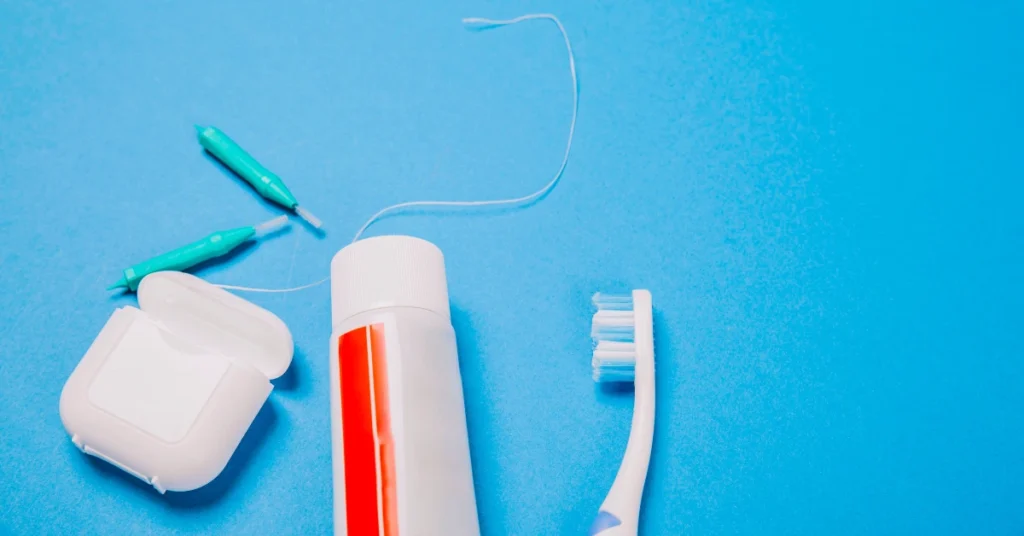
- Brush twice daily with proper technique – Use a soft-bristle brush angled at the gum line. Pay special attention to where the crown meets tissue – this is where bacteria accumulate.
- Floss or use interdental brushes daily – Clean the sides of the crown and just under the gum line where biofilm forms. Implant-specific floss or interdental brushes work well for some restorations.
- Consider a water flosser – These flush bacteria from hard-to-reach areas. Use in addition to, not instead of, traditional flossing.
- Use antimicrobial rinse as directed – Some high-risk patients benefit from periodic antimicrobial rinse use.
- Avoid metal tools at home – Never use metal toothpicks around implants. They can scratch surfaces, creating bacterial hiding spots.
Professional Maintenance – The Safety Net
- Attend cleanings every 3-6 months – Patients who skip maintenance have dramatically higher peri-implantitis rates. We remove calculus you can’t reach at home.
- Get annual X-rays – Bone loss appears on X-rays before you feel symptoms. Comparing year over year detects problems early.
- Allow thorough examinations – We measure pocket depths, check for bleeding, and assess tissue health to track changes.
- Follow recommended recall intervals – High-risk patients may need cleanings every 3 months based on research, not just scheduling preferences.
Risk Factor Modification
- Stop smoking – This single change reduces peri-implantitis risk more than anything else.
- Control diabetes – Keep HbA1c below 7%. Well-controlled diabetes doesn’t significantly increase complications.
- Address periodontal disease first – Get natural tooth gum disease under control before implant placement.
- Optimize nutrition – Adequate vitamin D and calcium support bone health.
If you have multiple risk factors – periodontitis history, smoking, diabetes – you need a more aggressive prevention plan with more frequent cleanings and additional home care tools. The patients who keep implants healthy for decades take prevention seriously year after year.
Protecting Your Implant Investment
In my experience, patients who understand peri-implantitis don’t just avoid it – they become advocates for prevention. They don’t dismiss early warning signs. They keep their cleaning appointments. They invest a few extra minutes each day in proper home care.
The difference between a healthy implant at 20 years and one that failed at 5 years often comes down to these daily choices and professional support. Peri-implantitis is serious, but it’s not inevitable. With awareness, prevention, and early intervention when needed, your implants can serve you for decades.
If you’re experiencing any symptoms – bleeding, swelling, bad taste, discomfort – don’t wait to see if it resolves on its own. Early mucositis responds beautifully to treatment. Advanced peri-implantitis with significant bone loss is much harder to manage. Schedule an evaluation at the first sign of trouble.
And if your implants currently feel perfect? That’s when prevention matters most. Keep up your daily care, attend your scheduled cleanings, and stay vigilant. Your future self will thank you.
Contact Comprehensive Dental Implant Center to schedule your implant maintenance appointment. We’ll assess your current implant health, identify any risk factors, and create a personalized prevention plan. Because the best treatment for peri-implantitis is preventing it from developing in the first place.
Peri-Implantitis: Common Questions About Symptoms, Risks & Prevention
What is peri-implantitis?
Peri-implantitis is an inflammatory condition around dental implants that involves both soft tissue inflammation and progressive bone loss, which can ultimately lead to implant failure if not treated.
How does peri-implantitis differ from peri-implant mucositis?
Peri-implant mucositis affects only the soft tissues and is reversible with proper care, while peri-implantitis involves bone loss and requires more intensive treatment.
What are early warning signs of peri-implantitis?
Early signs include bleeding during brushing or flossing, swollen or red gums, persistent bad taste or odor, gum recession, discomfort when chewing, and discharge around the implant.
What causes peri-implantitis to develop?
It results from bacterial biofilm buildup combined with risk factors like poor oral hygiene, history of periodontitis, smoking, diabetes, and infrequent professional maintenance.
Can peri-implantitis be prevented?
Yes. Consistent daily home care, regular professional cleanings, monitoring for early warning signs, and addressing risk factors significantly reduce peri-implantitis risk.
What treatments are available for peri-implantitis?
Treatment ranges from non-surgical options like mechanical debridement and antimicrobial irrigation to surgical interventions such as access flap surgery and regenerative procedures.