About half of the patients we see at our Henderson office didn’t come to us first. They came to us second – or third – because something felt off at their original consultation and they didn’t know what to do with that feeling. Some were quoted prices that seemed random. Some walked away with a treatment plan they didn’t understand. Others were pressured to commit on the spot. None of them had been given enough information to make a confident decision.
Getting a dental implant second opinion is one of the most reasonable things you can do before committing to a major surgical procedure. It’s not disloyal to your current provider. It’s not dramatic. It’s smart – and most reputable implant dentists will tell you exactly that.
This guide covers when to seek a second opinion on dental implants, what red flags look like at an initial consultation, the questions every provider should be able to answer, and what a good consultation actually looks like.
When Should You Get a Second Opinion on Dental Implants?
There’s no rule that says you need one. But there are situations where getting another perspective is the right call.
Consider seeking a dental implant second opinion if any of the following apply:
- You left the consultation more confused than when you arrived
- The provider couldn’t explain – or wouldn’t explain – why they recommended a specific approach
- You were quoted a price with no itemized breakdown
- You felt rushed toward a decision or were offered a discount that expired “today”
- The provider dismissed your concerns about cost, timeline, or recovery without addressing them
- You were told you’re not a candidate without a full imaging workup (like a 3D CBCT scan)
- Something just felt off and you can’t quite put your finger on it
That last one matters more than people think. Your instincts about how a practice communicates are usually telling you something accurate about how they’ll treat you throughout the entire process.
Second opinions are especially valuable before any bone grafting, sinus lift, or full-arch procedure. Anything with a longer recovery, higher cost, or greater complexity deserves more than one set of eyes.
Implant Dentist Red Flags: What to Watch for at a First Consultation
A consultation should give you information. If it feels more like a sales meeting, that’s worth paying attention to.
These are the implant dentist red flags that experienced patients – and most dental professionals – would agree signal a problem:
⚠️ Red Flag Checklist: Signs to Watch at Your Consultation
- Pressure to sign or commit the same day
- No 3D CBCT imaging before a treatment plan
- Pricing quoted as one number with no breakdown
- Provider dismisses your questions or seems irritated
- Only one option presented with no alternatives discussed
- No questions about your medical history or medications
- Discounts or offers that “expire today”
If two or more of these occurred at your consultation, a second opinion is worth your time.
Pressure to commit the same day
Dental implant treatment is not an emergency decision in most cases. A provider who creates urgency around a same-day commitment – especially with expiring discounts or limited-time pricing – is applying a sales tactic, not a clinical one. Good practices give you time to think.
No imaging before a diagnosis
You cannot accurately assess bone density, nerve position, or implant placement options from a visual exam and a few X-rays alone. A 3D cone beam CT scan (CBCT) is standard in implant planning. If a provider is giving you a firm treatment plan or quoting full pricing without this level of imaging, they are guessing – and you’re the one who pays for that.
Vague or unexplained pricing
Implant costs vary based on the number of implants, whether bone grafting is needed, the type of restoration, and several other factors. A quote that’s a single number with no explanation isn’t a plan – it’s a starting point for negotiation. Ask for an itemized estimate and watch how the office responds. Resistance to transparency is a red flag.
Dismissiveness about your questions
You are entitled to ask anything you want about a procedure that involves surgery, recovery time, and a significant financial commitment. A provider who makes you feel uninformed for asking, who rushes through answers, or who treats your questions as an obstacle is telling you something about how the relationship will go.
Overselling one option without explaining alternatives
There are often multiple approaches to tooth replacement. Full-arch cases, in particular, involve real trade-offs between different implant systems and restoration types. If a provider recommends the most expensive option without walking you through why – and without acknowledging that alternatives exist – that’s worth questioning.
No discussion of your medical history or medications
Implant success depends in part on factors like bone density, smoking history, diabetes management, and certain medications. A provider who doesn’t ask about these isn’t doing a complete workup. Implants are surgery, and they require the same kind of medical intake that any surgical consultation would involve.
Second Opinion Dental Implants Questions: What to Ask Every Provider
Walking into a dental implant second opinion with prepared questions changes the dynamic. You’re not waiting to be told what to do – you’re evaluating whether this provider is the right fit.
Here are the questions worth asking at every implant consultation:
- What imaging will you use to develop my treatment plan, and can I see it? A CBCT scan should be part of any complete workup. You have a right to see and understand what it shows.
- Am I a candidate for implants, and if not, why? If there are bone density concerns or other limiting factors, ask what would need to change – or what alternatives exist.
- What does my full treatment plan include, step by step? Implant treatment often involves multiple phases. You should know what each phase involves, how long it takes, and what recovery looks like.
- Can you give me an itemized cost breakdown? Ask for costs by procedure, including any bone grafting, the implant fixture, the abutment, and the final crown or restoration.
- What happens if the implant fails? Reputable practices have clear policies on this. Providers who are evasive about it are telling you something important.
- Who performs the surgery – you or a specialist? Some general dentists refer out for the surgical phase. That’s fine, but you should know the full team involved.
- How many of these procedures have you performed, and do you have before-and-after cases I can review? Experience matters in implant dentistry. A provider confident in their work won’t hesitate to share it.
- What are my options, and why are you recommending this one? You want a provider who can explain the reasoning – and acknowledge that other approaches exist.
How a provider responds to these questions tells you as much as the answers themselves. Confidence, patience, and transparency are good signs. Irritation, deflection, or vague generalities are not.
What a Good Dental Implant Consultation Looks Like
A well-run consultation has a clear structure. It’s not a sales pitch with a clinical backdrop – it’s a genuine assessment of your situation followed by an honest conversation about your options.
| Consultation Element | ⚠️ Red Flag Practice | ✅ Good Practice |
|---|---|---|
| Imaging | Visual exam only, basic X-rays | 3D CBCT scan reviewed with you |
| Pricing | Single number, no breakdown | Itemized by procedure before you commit |
| Treatment Options | One option presented as the only option | Alternatives explained with trade-offs |
| Timeline | Pressure to decide same day | You’re encouraged to take time and compare |
| Medical Intake | Little or no health history discussion | Full review of history, medications, risk factors |
| Your Questions | Rushed past or dismissed | Answered patiently and completely |
Here’s what the process should look like: a thorough medical and dental intake, followed by 3D CBCT imaging reviewed together with you. The provider walks you through the findings in plain language – not just conclusions, but what they’re actually seeing and why it matters for your case.
From there, you receive a step-by-step treatment plan with timeline, recovery expectations, and an itemized cost breakdown. And critically – you’re given time. A good consultation ends with the provider encouraging you to think it over, ask more questions, and decide when you’re ready. Not before.
How Our Henderson Implant Team Approaches Second Opinion Consultations
We’re a dedicated dental implant center in Henderson, NV, and our approach is built around one idea: patients make better decisions when they actually understand what they’re deciding.
That sounds obvious. It’s surprisingly rare in practice.
We see patients regularly who were told they needed a specific procedure without being shown the imaging that supported it. Patients who received a single-line quote with no breakdown. Patients who felt like their questions were an inconvenience. Roughly half of our patients chose us after an experience somewhere else that left them uncertain – and that’s not a coincidence. It reflects what happens when education isn’t a priority.
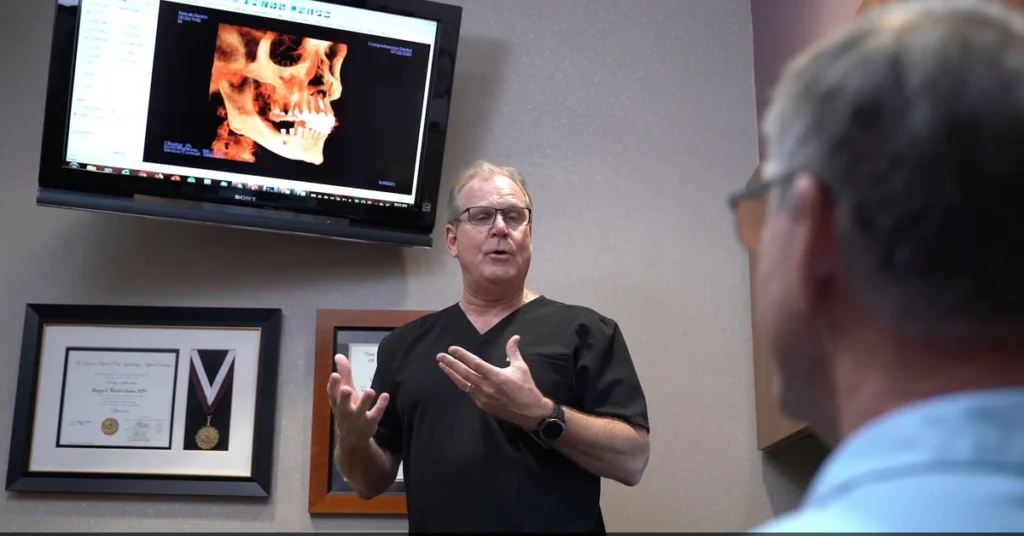
Our consultations include a CBCT scan so we can show you exactly what we’re working with. We walk through your imaging together. We explain what we recommend and why – and we tell you if an alternative would serve you equally well. We give you a complete cost breakdown before you commit to anything.
We also don’t offer same-day pressure. If you need time to think, compare, or get a second opinion on dental implants, that’s genuinely fine with us. We’d rather you make a decision you’re confident in than one you’re rushed into.
One thing patients mention more than almost anything else: they got to sit down with Dr. Hendrickson directly, and he walked them through everything himself. We hear regularly that it’s the first time anyone has actually explained their treatment to them in a way that made sense, and that’s what we think a consultation is supposed to feel like.
If you want to understand more about what separates a strong implant practice from an average one, our guide on what to look for in an implant dentist covers the criteria in more detail.
You can also learn more about our practice and team at our Henderson dental implant center page.
For additional context on why implant provider selection matters, the American Academy of Implant Dentistry maintains a directory of credentialed implant specialists and offers guidance on what qualifications to look for when choosing a provider.
Frequently Asked Questions About Dental Implant Second Opinions
Is it rude or disloyal to get a second opinion on dental implants?
Not at all. Getting a dental implant second opinion is a normal part of making an informed decision about a major procedure. Any implant dentist worth working with will support your right to do so. If a provider discourages you from seeking another perspective, that itself is a red flag worth noting.
How do I find a good implant dentist for a second opinion?
Look for a practice that specializes in implants rather than a general dentistry office that offers implants as one of many services. Ask whether they perform CBCT imaging in-house, how many implant cases they complete per year, and whether they’ll give you an itemized estimate. Pay attention to how clearly they communicate during the consultation – it’s a reliable indicator of how the full treatment process will go.
What if the second opinion is more expensive than the first?
Cost differences between providers are common, and a higher quote doesn’t automatically mean the provider is overcharging. Ask both practices to give you itemized breakdowns so you can compare what’s actually included. Lower prices sometimes reflect fewer diagnostic steps, lower-quality materials, or less experienced providers. Higher prices should come with a clear explanation of what you’re getting for the difference.
Can I bring my existing X-rays or imaging to a second opinion consultation?
Yes, and you should request them from your original provider before your appointment. You have a legal right to your own records. That said, many implant specialists will want to take their own CBCT scan, since older X-rays or imaging from another office may not capture the detail needed for precise implant planning. A practice that accepts only your existing records and skips new imaging isn’t doing a complete evaluation.
Get a Second Opinion With No Pressure – Free Consultation in Henderson
If you’ve already had a consultation and something felt uncertain – about the plan, the pricing, the pressure, or the communication – you’re not obligated to move forward with it. A dental implant second opinion costs you nothing except a bit of time, and it can save you from a treatment decision you’re not fully confident in.
At our Henderson implant center, consultations are designed to give you information first. No pressure. No same-day commitments. Just an honest look at your situation and a clear explanation of your options.
Schedule your free consultation today and find out what your options actually are.