Hybridge can sound like the name of an implant or a type of bridge. It is actually a full-arch treatment system made of several connected parts, and each part does a different job.
Hybridge is a branded full-arch dental implant treatment. Dental implants support a fixed bridge that replaces all the teeth in an upper or lower arch. The patient does not take the bridge in and out like a removable denture, although a dentist can remove it when clinical care or repair requires it.
Start with the system
The four parts people mean when they say “Hybridge”
The easiest way to understand Hybridge is to separate what you see from what supports it. This simplified model shows the relationship between the replacement teeth, frame, implants, and jaw. It is not an individual treatment plan.
- 1Replacement teeth and gumsPMMA teeth form the visible part of CIC’s Hybridge bridge, along with the prosthetic gum area.
- 2Supporting frameworkA chrome cobalt frame inside the bridge supports the prosthetic teeth. The material is one part of the design, not a promise about the result.
- 3Dental implantsThe implants are placed in the jaw and support the fixed bridge. Their number and position are planned for the individual arch.
- 4The treatment system“Hybridge” describes the coordinated full-arch approach, not one implant or one material by itself.
Clear up the labels
How Hybridge differs from other tooth-replacement terms
These terms are often used as if they mean the same thing. They do not. The most important difference is how much of the mouth the treatment replaces and whether the name describes a component, a restoration, or a treatment concept.
The official Hybridge patient FAQ says its full-arch approach typically uses five implants in the lower arch and six in the upper. “Typically” matters: imaging, available bone, bite forces, and the clinician’s plan can change the number or placement. A web article cannot tell you how many implants your arch needs.
A decision, not a diagnosis
When a Hybridge evaluation may be worth discussing
Full-arch treatment enters the conversation when restoring teeth one at a time may no longer solve the larger problem. That does not mean every person with several missing teeth needs Hybridge.
Reasons people seek an evaluation
- Multiple teeth are missing, failing, or repeatedly needing treatment.
- A removable denture feels loose or does not provide the function the patient wants.
- Decay, periodontal disease, or failing dental work affects much of an arch.
- A dentist has raised full-arch replacement as one possible path.
What the clinical exam must determine
- Which teeth, if any, can be predictably retained.
- Bone volume and where implants can be planned.
- Gum and tissue health.
- Bite, space, and functional forces.
- Medical history, habits, healing factors, and alternative treatments.
Important: Age alone does not decide candidacy, and being told you have limited bone does not settle the question either. A provider needs current imaging and a complete clinical assessment before recommending Hybridge, grafting, another implant design, or a non-implant option.
From questions to a finished bridge
What the Hybridge process generally involves
The order is predictable even when the timing is not. Healing needs, extractions, grafting, and the complexity of the case can change the schedule.
Consultation and imaging
The team reviews your teeth, bone, tissues, bite, health history, goals, and treatment alternatives.
Restorative planning
The provider plans the implant positions and the shape, fit, and appearance of the temporary and final teeth.
Surgery and healing
Implants and any necessary surgical care are completed. Temporary teeth may be possible, depending on the clinical plan.
Final bridge and follow-up
The final restoration is fitted and adjusted. The team then sets a home-care and professional follow-up schedule for your situation.
Hybridge’s own materials describe an approximately eight-week pathway for many patients. Your provider can give you a more reliable schedule after an exam because additional healing or surgical steps can extend it.
Look at both sides
Potential benefits and practical limits
Why patients consider it
- One coordinated restoration replaces a complete arch.
- The bridge is fixed rather than removed by the patient.
- The treatment can address widespread tooth loss or failing dental work as one full-arch problem.
- A trained provider plans the surgical and prosthetic parts together.
What still requires careful planning
- Treatment involves surgery and a healing period.
- Not every patient or arch is a candidate.
- The bridge, implants, bite, bone, and tissues still require ongoing care.
- Cost and timing depend on the actual treatment plan.
- Another full-arch or tooth-preserving option may fit better.
Three separate questions
Materials, care, and cost
CIC’s Hybridge bridge uses a chrome cobalt framework with PMMA replacement teeth. Those material names are not a result by themselves. Ask how the bridge will be cleaned, which parts can wear or chip, what a repair would involve, and whether the recommended design changes any part of your follow-up.
A fixed bridge is not maintenance-free. Daily cleaning and professional follow-up help the team monitor the tissues, bite, implants, and prosthetic teeth. The right tools and visit frequency depend on your restoration and oral health.
Hybridge cost cannot be reduced to one responsible online number. The plan can change with the number of arches, remaining teeth, imaging, surgical needs, grafting, temporary teeth, final materials, sedation, and follow-up care. Ask for a written plan that separates what is included from what may be billed later.
Why provider experience matters
Hybridge is a system, but your treatment is still clinical
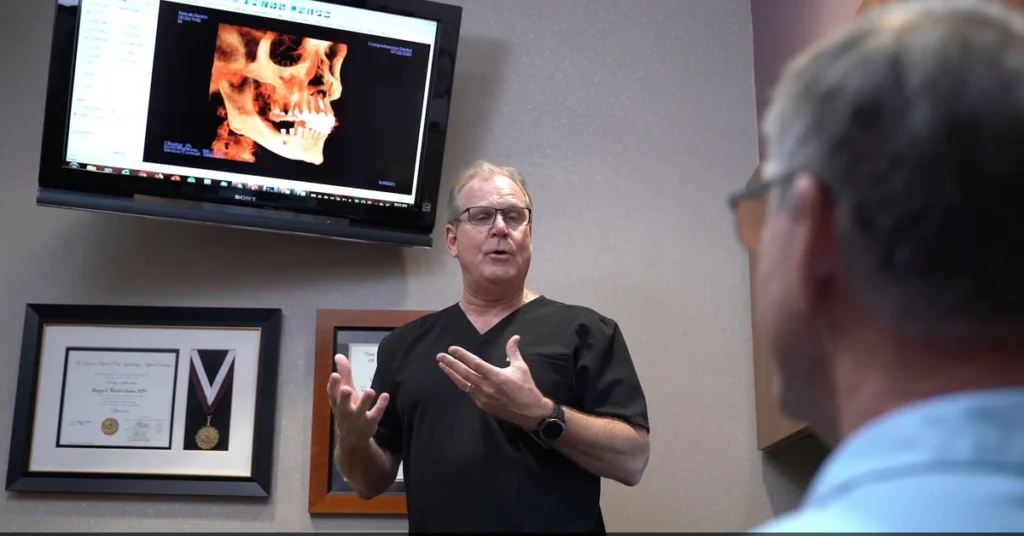
A brand name does not replace diagnosis, surgical judgment, restorative planning, or follow-up care. CIC’s biography identifies Dr. Gregg Hendrickson as a National Trainer for Hybridge Full Arch Restorations and a Diplomate of the American Board of Implant Dentistry. That experience is relevant, but the useful question is still what he recommends after reviewing your teeth, bone, bite, health history, and alternatives.
If you are looking for CIC’s local Hybridge service details rather than an educational overview, visit the Hybridge Full Arch Restorations page.
Short answers
Hybridge dental implant FAQs
Is Hybridge the same as dental implants?
No. Dental implants are the supports placed in the jaw. Hybridge is a branded full-arch treatment system in which several implants support one fixed bridge that replaces an entire upper or lower arch.
Is Hybridge the same as All-on-4?
No. All-on-4 is a treatment concept in which four implants support a full arch. Hybridge is a branded protocol and prosthetic system. Official Hybridge materials say its approach typically uses five lower implants and six upper implants, but the actual plan must be based on the patient’s anatomy and clinical needs.
How many implants does a Hybridge restoration use?
Hybridge says its full-arch approach typically uses five implants in the lower arch and six in the upper. The word typically is important: imaging, available bone, bite forces, and the provider’s plan can change the number and placement.
Who may be evaluated for Hybridge?
People with many missing or failing teeth, recurring dental problems across an arch, or difficulty with removable dentures may seek an evaluation. Only a clinical exam and imaging can determine whether Hybridge, another full-arch option, or tooth-preserving care fits the individual case.
How much does Hybridge cost?
Cost varies with the number of arches, remaining teeth, imaging, surgical and grafting needs, temporary restorations, final materials, sedation, and follow-up care. A provider must examine the case before giving a responsible written estimate.
How long can a Hybridge restoration last?
There is no responsible universal lifespan for every implant or bridge. Oral health, bite forces, habits, maintenance, implant stability, prosthetic wear, and other clinical factors all affect longevity. Your dental team should explain which parts may wear, what follow-up is expected, and how repairs are handled.
The next useful answer comes from your images and exam
If Hybridge sounds relevant, a consultation should answer three things: which teeth can be kept, whether a fixed full-arch plan fits your anatomy and health, and how Hybridge compares with the other reasonable options for your mouth.
Schedule a free consultation