An implant-supported bridge replaces missing teeth in a row with one connected restoration. It can fill the section while keeping the teeth around it and it may need fewer implants than there are teeth to replace.
For example three missing back teeth can often be replaced with a bridge supported by two implants. The implants hold the bridge in the jaw and a replacement tooth between them fills the middle of the gap. You don’t remove the bridge at home.
Whether that arrangement suits you depends on the position of the gap the bone for implants and the health of your remaining teeth.
How an implant-supported bridge works
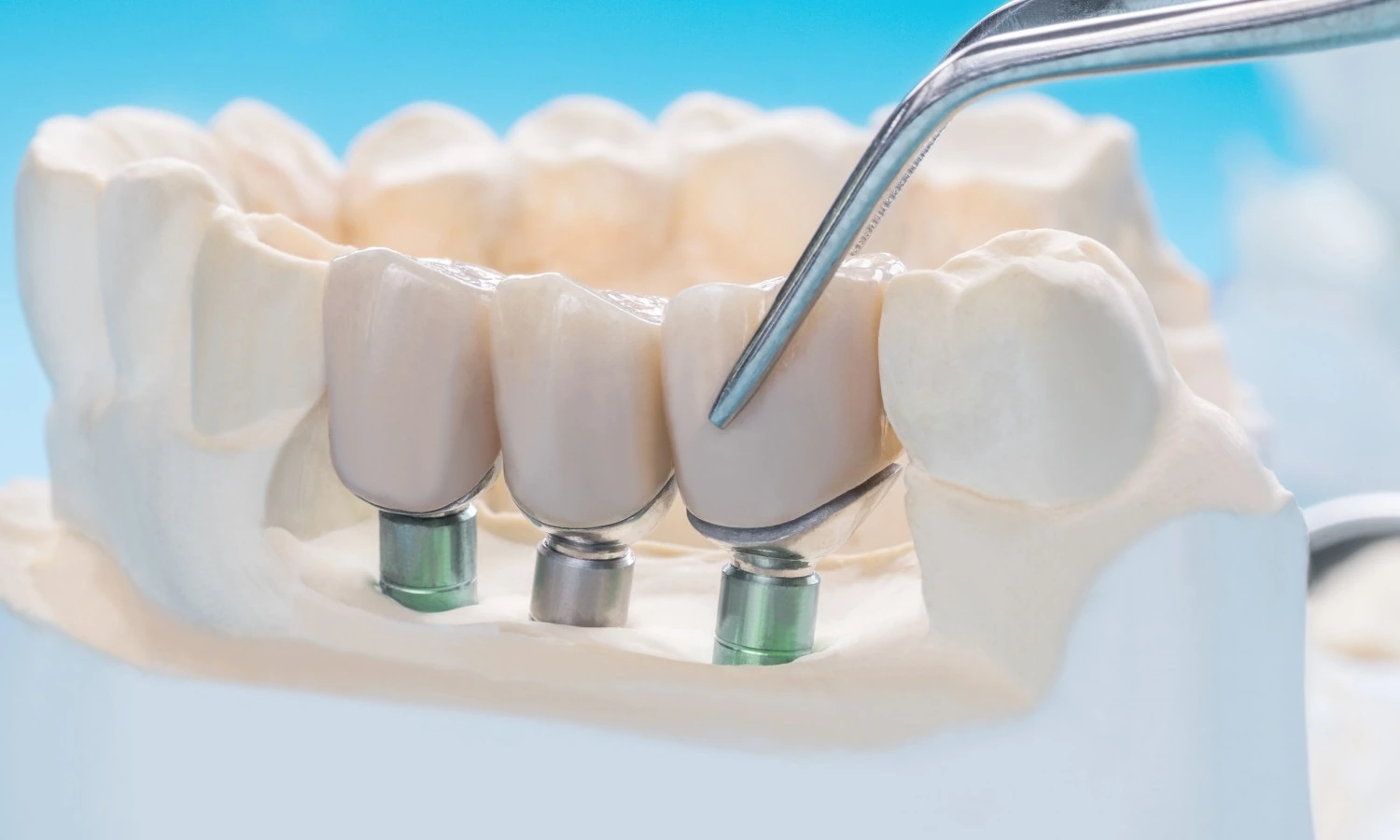
A dental bridge joins replacement teeth together. Some sit over supports; the teeth spanning the gap between those supports are called pontics. The connected bridge holds them in place.
With an implant-supported bridge the supports are implants placed in the jawbone. A traditional bridge uses teeth beside the gap for support instead. Those teeth must be reshaped to hold crowns that anchor the bridge.
Using implants means the neighboring teeth don’t need that reshaping to support your replacement teeth. It also means surgery and time for the implants to heal before the final bridge is fitted.
How many implants does a bridge need?
The number of replacement teeth and the number of implants can be different. These are examples:
- Three missing back teeth can often be replaced using two implants.
- Four missing front teeth can often be replaced using two implants.
- Four missing back teeth generally use two or three implants depending on the design.
For two teeth your dentist may consider two separate implant crowns. In selected cases one implant can support a crown and an attached replacement tooth extending beside it. That extension needs planning because it places different forces on the implant.
Each implant needs space and bone to hold it in the planned position. Nerves, sinuses and the way your teeth meet when you bite can affect those positions. Adding implants isn’t automatically helpful if it crowds the available space.
If bone is limited the discussion may include grafting or a different bridge design. The examples above help explain a proposed treatment; they can’t determine the implant count for your mouth.
Implant-supported bridge vs. Arch replacement
A bridge replaces a section of missing teeth. When the other teeth can be kept treatment can focus on that section, including gaps than three or four teeth.
Full-arch treatment replaces the teeth across an upper or lower arch. It may be considered when those teeth are already missing, or when the remaining teeth cannot reasonably be saved. A large gap alone doesn’t establish that the other teeth should be removed.
Teeth with decay, looseness, or old dental work need individual assessment before any extraction decision. The treatment recommendation depends on which teeth can be treated and kept. For a single missing tooth, a single tooth implant is another option.
Implant-supported bridge vs. individual implants
Separate implants give each replacement tooth its own implant and crown. A bridge can use implants to replace the same section reducing the number of implant sites and fixtures involved.
Both options require bone at the planned implant sites. Fewer implants don’t necessarily mean you can avoid grafting.
You can usually floss between implant crowns much as you would between natural teeth. With a bridge you’ll also need to clean underneath the replacement teeth. The bridge needs room for cleaning tools to reach those spaces so cleaning access is part of its design.
Implant-supported bridge vs. traditional bridge
A traditional bridge doesn’t require implant placement. It can be worth considering if the teeth beside the gap already need crowns or if you want to avoid surgery.
If those teeth are healthy however preparing them for a bridge removes enamel that cannot grow back. An implant-supported bridge avoids using them as anchors. The trade-off is the surgery, healing time and associated cost.
The two restorations have different care and repair needs. Natural teeth supporting a bridge can develop decay or problems inside the tooth. Implant-supported bridges can have chipped material, loose screws, or other repair needs.
Implant-supported bridge vs. removable partial denture
A partial denture can replace missing teeth in different parts of your mouth even when you still have natural teeth between them. It rests on the gums. May attach to your remaining teeth. It doesn’t require implants. It is often a lower-cost option.
You remove it for cleaning. It can have bulk in the mouth and may move during chewing. An implant-supported bridge stays fixed in place but requires surgery and cleaning beneath the connected teeth.
If you’re concerned about surgery or cost a partial denture may be worth considering. We can talk through how it would compare with a fixed bridge for you. Our guide to full dentures can also help you get familiar with the removable options.
| Option | What supports it | Implant surgery | Fixed or removable | Daily cleaning |
|---|---|---|---|---|
| Implant-supported bridge | Implants | Yes | Fixed | Brush and clean beneath the bridge. |
| Individual implants | An implant beneath each replacement tooth | Yes | Fixed | Brush and clean between teeth. |
| Traditional bridge | Neighboring natural teeth | No | Fixed | Brush and clean beneath the bridge. |
| Removable partial denture | Gums and remaining teeth | No | Removable | Remove to clean; brush remaining teeth. |
What affects the cost of an implant-supported bridge?
Your estimate depends on how teeth the bridge replaces how many implants it needs and the material used to make it. Bone grafting or removing teeth that cannot be saved can add to the treatment involved.
Using implants than separate crowns may reduce the cost but implant count isn’t the whole price. Before you decide you’ll want a written estimate that makes clear whether imaging, temporary teeth and the final bridge are included.
Getting an implant-supported bridge: treatment and healing
Before treatment begins we’ll talk through what your bridge would involve. An exam and imaging help determine where the implants can go and whether you need a bone graft. We’ll also discuss the time between each stage and what your finished bridge will look like.
After the implants are placed your jawbone needs time to heal around them and hold them firmly. This usually takes three to six months though some people need longer. If you need a bone graft first there may be a healing period before the implants can be placed.
Once the implants have healed enough, impressions give the dental lab the measurements needed to make your bridge. At the fitting appointment, we check how it fits and how your teeth meet when you bite before securing it in place.
If you’re worried about having a gap while you heal, ask us about temporary teeth. We can discuss whether a temporary restoration would work for you and when to expect your final bridge.
Who can get an implant-supported bridge?
To see whether a bridge is a good fit for you, we look at the bone where the implants would sit, the health of your gums, and how your teeth meet when you bite. We’ll also discuss your health and whether anything could make healing more difficult. Smoking, uncontrolled diabetes, and a history of gum disease can increase the risk of complications and may affect the treatment we recommend.
Bring a current medication list and discuss your health history at your consultation. Some treatments, including high-dose antiresorptive medication used for cancer, can make implant placement unsuitable.
How long does an implant-supported bridge last?
An implant-supported bridge can last ten years or longer, though it may need repairs along the way. The material used to make the bridge, the forces it takes when you bite, and daily cleaning all matter.
If the bridge wears out or becomes damaged, it may be possible to repair or replace it while keeping the implants underneath. A loose bridge, chipped tooth, or sore gums are reasons to book a dental visit rather than wait for your next check-up.
Cleaning and caring for an implant-supported bridge
Brush your teeth and clean beneath the bridge every day. A floss threader or interdental brush can help you reach under the replacement teeth; a water flosser may help where access is difficult. Your dental team can demonstrate suitable tools for your bridge.
Regular maintenance visits allow the team to check the gums, implants, and restoration. Your recall schedule should reflect your needs and risk factors.
Free consultation in Henderson
Find out if your gap can be bridged while keeping your other teeth
Bring your questions about the teeth around your gap, and we’ll look at what a bridge would involve for you.
Prefer to talk with us?(702) 960-1983
Frequently asked questions
Can two implants replace three teeth?
Yes. Two implants supporting a three-tooth bridge are a common option for three missing back teeth. Your dentist still needs to check the bone, space, and bite before recommending that design.
Is an implant-supported bridge permanent?
It is fixed in place and only a dentist removes it. It still needs cleaning and check-ups, and it may eventually need repair or replacement.
Can I keep my other teeth?
A bridge replaces the missing section without using neighboring teeth for support. Whether your other teeth can remain depends on their health, which should be assessed before any extraction decision.
Will I have teeth while the implants heal?
A temporary restoration may be possible. Ask what is available for your gap and when the final bridge is expected, so you understand each stage before treatment starts.