I’ve watched countless patients hesitate before asking questions about smoking and dental implants, unsure whether their habit disqualifies them from treatment. The anxiety in their eyes tells me they’re bracing for disappointment. This is where the real risks of smoking and dental implants helps patients make informed, confident decisions about their care.
Here’s what I tell them: Yes, smokers can get dental implants, but smoking and dental implants introduce unique healing and long-term stability challenges. Research shows smokers face a 140% higher risk of implant failure compared to non-smokers.
What matters most isn’t whether you smoke now – it’s your willingness to make changes that protect your investment. I’ve placed successful implants in former smokers who committed to quitting before surgery. Patients who thought they couldn’t quit surprised themselves when they understood what was at stake.
Understanding how smoking affects implants at a biological level, knowing the specific risks you face, and having a clear plan to maximize success – that’s what this article provides. Because dental implants represent a significant investment in your health, confidence, and quality of life.
Why Smoking and Dental Implants React Differently Than Natural Teeth
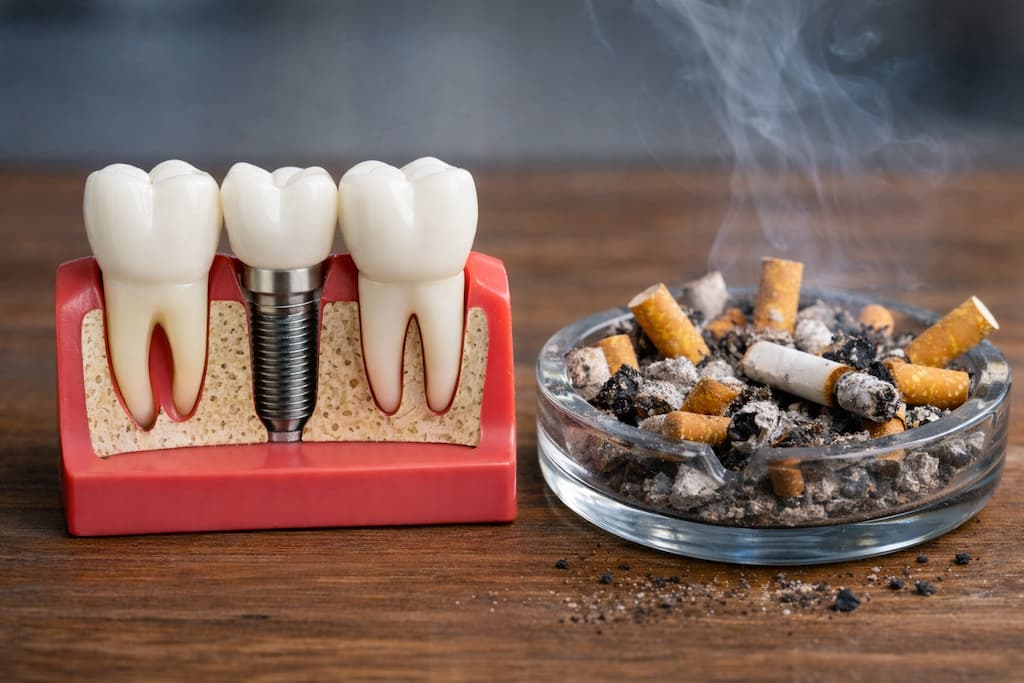
Let’s clear up common misconceptions. Many smokers underestimate how differently implants respond to tobacco compared to natural teeth. The biological differences between smoking and dental implants explain why failure risks are higher than with natural teeth.
“I’ll just smoke less during healing” sounds reasonable, but research reveals a dose-response relationship – the more you smoke, the higher your failure risk. Even reducing from 20 to 10 cigarettes daily doesn’t eliminate risk.
“I’m only a light smoker” doesn’t matter. While heavy smokers face the highest risks, even light smoking compromises healing. Your body doesn’t have a threshold where “a little smoking” is safe.
“I can quit after surgery” gets the timeline backward. Pre-surgery cessation is critical because your body needs time to recover normal blood flow and strengthen immune response before implant placement.
The biological differences explain why failure risks are higher than with natural teeth. Here’s what makes implants different from natural teeth:
- No periodontal ligament protection – Natural teeth have a ligament cushion providing blood supply. Implants contact bone directly, making them more vulnerable.
- Complete dependence on osseointegration – Natural teeth are already anchored. Implants must fuse with bone through a process smoking directly disrupts.
- More susceptible to bacterial colonization – The implant-gum interface creates areas where bacteria establish infection more easily when immune response is weakened.
- Cannot repair themselves – Natural teeth have living tissue that responds to damage. Once bone loss begins around an implant, reversal becomes extremely difficult.
- Higher risk in upper jaw – The maxilla has less dense bone, making it particularly vulnerable. Research shows upper jaw implants in smokers face 5.90 times higher early failure risk compared to 3.76 times for lower jaw.
How Smoking and Dental Implants Healing Is Compromised
Understanding biological impacts helps explain why stakes are higher with smoking and dental implants.
The Critical First 72 Hours
When considering smoking and dental implants, the first 72 hours after placement are critical because your body must form a stable blood clot for healing. Smoking disrupts this through multiple mechanisms. Heat and suction can physically dislodge the clot. Chemicals prevent proper formation. The result – dry socket – exposes bone and nerve endings painfully.
Smoking and dental implants create hostile healing conditions, including:
- Vasoconstriction reduces blood flow – Nicotine narrows vessels, dramatically decreasing oxygen and nutrient delivery. Without adequate blood supply, tissues can’t heal properly.
- Compromised immune response – Smoking impairs white blood cell function, making infection harder to fight.
- Increased inflammation – Tobacco chemicals trigger responses working against healing rather than supporting it.
- Delayed epithelialization – Soft tissue healing slows significantly, leaving implants exposed to contamination longer.
- Higher hematoma risk – Smoking affects clotting factors, increasing blood pooling under tissue.
- Dry mouth effects – Reduced saliva eliminates your mouth’s natural antibacterial defense system.
The Osseointegration Period: Months 1-6
Osseointegration is the biological process where bone grows onto the titanium surface, creating solid anchor. This is why smoking and dental implants are biologically incompatible during early bone healing.
Nicotine exposure from smoking and dental implants patients maintains vasoconstriction for hours after each cigarette, chronically depriving bone cells of oxygen and nutrients. Research found increased salivary arginase activity – reducing nitric oxide production and increasing infection susceptibility. This is why smokers are biologically incompatible during early bone healing.
What happens during osseointegration when smoking and dental implants are combined:
- Impaired osteoblast function – Bone-building cells work less effectively, producing less and lower quality bone.
- Increased osteoclast activity – While building slows, bone-removal cells may increase, creating net bone loss.
- Reduced bone-to-implant contact – Even when integration occurs, bone-implant contact percentage is significantly lower in smokers.
- Compromised bone quality – Bone that forms tends to be less dense and less organized, affecting long-term stability.
- Extended healing timeline – What takes 3-4 months in non-smokers might require 6 months or more in smokers.
Research analyzing over 59,000 implants found smokers face 159% higher risk of early implant failure during this critical window. At the patient level, smokers are twice as likely to experience early failure.
Long-Term Stability Risks of Smoking and Dental Implants
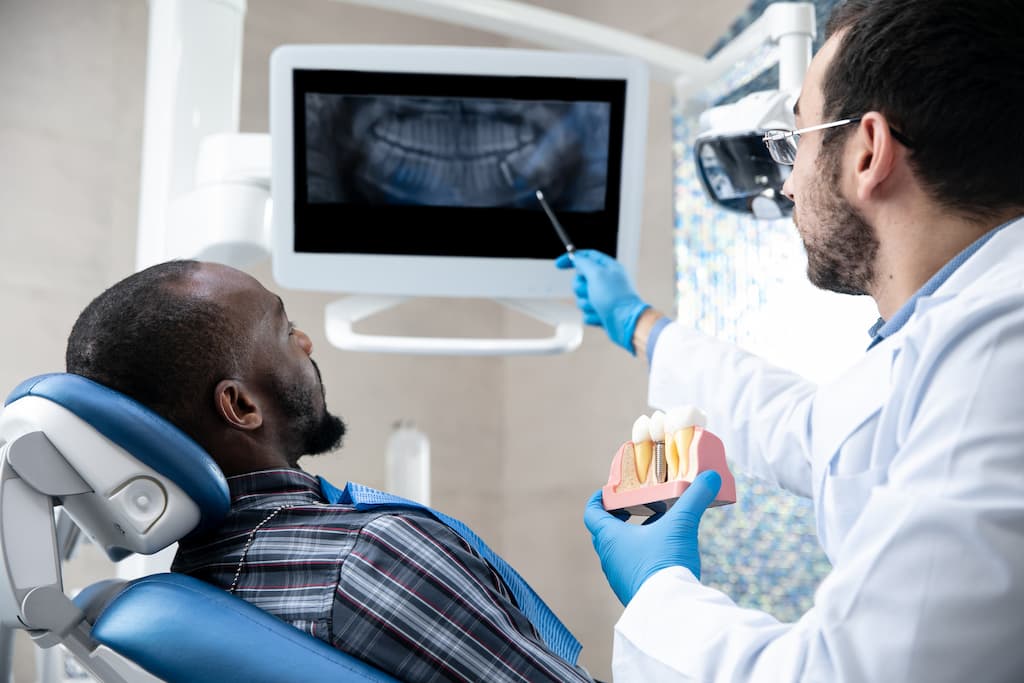
Even after successful integration, smoking creates ongoing stability threats.
Peri-Implantitis: The Silent Destroyer
The link between smoking and dental implants and peri-implantitis is one of the strongest findings in implant research. Peri-implantitis affects tissues surrounding implants – like gum disease but more aggressive. Smokers face 2.6 times higher risk. The condition starts with gum inflammation, progresses to bone loss, and eventually causes implant loosening and failure.
Early peri-implantitis often develops without symptoms. By the time patients notice problems, significant bone loss has already occurred.
Marginal Bone Loss and Long-Term Complications
Research analyzing thousands of cases of smoking and dental implants found smokers experience 0.580mm more marginal bone loss compared to non-smokers. This might sound small, but it’s often progressive. An implant successful at one year might show concerning loss at five years.
Long-term complications in smokers include:
- Progressive mobility – As bone loss continues, implants showing slight movement signal serious problems.
- Recurring infections – Higher infection rates requiring antibiotics, each episode causing additional bone loss.
- Prosthetic complications – Crowns or bridges experience more frequent loosening when underlying implants lack stable support.
- Aesthetic deterioration – As tissue recedes, metal components may become visible.
- Cumulative financial burden – Multiple maintenance visits and treatments add up significantly.
- Potential implant removal – Severe complications may require complete implant removal.
The Numbers: Failure Rates and Research
Large-scale research on smoking and dental implants consistently shows elevated failure risk across all implant types and locations.
A systematic review examining 292 publications tracking over 150,000 dental implants found smokers face 140.2% higher overall failure risk. The odds ratio of 2.402 means smokers are more than twice as likely to experience failure.
Timing matters greatly when evaluating smoking and dental implants outcomes. Early failures show 159% increased risk for smokers. Location matters too – upper jaw early failure risk hits an odds ratio of 5.90 versus 3.76 for lower jaw.
The dose-response relationship means each additional cigarette adds incremental risk. Time since cessation affects outcomes – former smokers quitting less than 2 years before placement faced 2.7 times greater failure risk compared to those quitting more than 2 years prior.
Smoking Cessation Protocols for Smoking and Dental Implants Candidates
Smoking doesn’t have to be an absolute barrier, but smoking and dental implants require strict timing and commitment.
Before Surgery: Critical Preparation
Absolute minimum: 1-2 weeks cessation before surgery for blood viscosity recovery. Recommended: 6-8 weeks for optimal preparation.
Why longer cessation matters for smoking and dental implants:
- Blood flow restoration – Vasoconstriction reverses within 24-48 hours but continues improving for weeks.
- Immune function recovery – White blood cell function normalizes, infection-fighting ability strengthens.
- Reduced inflammation – Chronic inflammatory markers decrease, tissues become less reactive.
- Improved bone metabolism – Osteoblast function returns to normal, bone formation/resorption balance shifts favorably.
- Enhanced wound healing – Epithelial cells function more effectively, collagen production improves.
- Saliva production increase – Your mouth’s natural defense system works properly again.
After Surgery: The Critical Window
For smoking and dental implants, the absolute minimum is 8 weeks smoke-free after placement for initial osseointegration. Complete osseointegration: 3-6 months depending on bone quality and location.
Post-surgery guidelines:
- Complete abstinence weeks 1-2 – Even one cigarette can disrupt blood clots and introduce infection risk.
- Continued cessation weeks 3-8 – Early osseointegration occurs. Smoking directly interferes with bone colonization.
- Extended cessation months 3-6 – Full integration completes. Maintaining cessation gives best bone-to-implant contact.
- Consider permanent cessation – Even after healing, resumed smoking increases long-term peri-implantitis and bone loss risks.
- Avoid secondhand smoke – Heavy exposure can still compromise healing.
Vaping and e-cigarettes? Still deliver nicotine (causing vasoconstriction), introduce chemicals whose healing effects aren’t understood, and create heat/inhalation disrupting recovery. Treat them the same as smoking during healing.
Practical Strategies for Smokers Considering Implants
Cessation Support Options
Patients navigating smoking and dental implants don’t have to quit alone. Evidence-based support significantly improves success:
- Nicotine replacement therapy – Patches, gum, lozenges deliver controlled nicotine without smoke, managing withdrawal while eliminating combustion products.
- Prescription medications – Varenicline (Chantix) and bupropion (Wellbutrin/Zyban) reduce cravings and withdrawal through different mechanisms.
- Behavioral support – Counseling addresses psychological addiction aspects medication can’t resolve.
- Nevada Quitline – 1-800-QUIT-NOW provides free telephone counseling for Nevada residents.
- Set specific quit date – Choose 2-3 weeks ahead, mark your calendar, tell supportive people.
- Identify triggers – Track when and why you smoke for a week to understand patterns.
- Create substitution behaviors – Deep breathing, short walks, sugar-free gum for when cravings hit.
If You Can’t Quit Completely
If you can’t quit completely, harm reduction still improves smoking and dental implants outcomes:
- Reduce consumption significantly – Cut cigarettes by 50-75%. Each cigarette eliminated reduces risk incrementally.
- Prioritize critical periods – Stay completely smoke-free from one week before through 2-3 weeks after surgery minimum.
- Never smoke immediately before/after appointments – Avoid smoking several hours before dental visits.
- Triple hygiene efforts – Meticulous cleaning compensates for infection risk. Professional cleanings every 8-10 weeks.
- Accept higher monitoring needs – More frequent follow-ups catch problems early.
What Success Looks Like for Smokers

Former smokers who quit before treatment show that smoking and dental implants success rates can approach those of non-smokers. Research found ex-smokers quitting more than 2 years before placement faced only marginally higher risk.
Even temporary cessation for 6-12 months around surgery gives implants much better long-term chances. In my practice, hundreds of patients used implant treatment as motivation to quit – many permanently, others at reduced levels. Both groups show better outcomes than continued smoking.
Success factors include commitment to pre-surgery cessation, complete abstinence during early healing, reduced consumption if resuming, enhanced hygiene maintenance, and regular monitoring.
Making Your Decision
Smoking significantly increases failure risk, and smoking and dental implants demand informed commitment. But it doesn’t make implants impossible. With proper preparation, commitment to protocols, and realistic expectations, smokers can succeed.
Your commitment determines outcome more than any other factor. Patients who quit 6-8 weeks before surgery, stay smoke-free through 6-month healing, and either remain smoke-free or dramatically reduce consumption show worthwhile success rates.
Every patient considering smoking and dental implants benefits from a personalized risk-reduction plan. Schedule your free consultation today to discuss your situation and create a personalized plan maximizing your chances of long-term success.
Frequently Asked Questions About Smoking and Dental Implants
What long-term risks do smokers face with dental implants?
Smokers face increased risks of peri-implantitis, marginal bone loss, prosthetic complications, and reduced implant stability over time. The success of smoking and dental implants depends heavily on cessation timing and hygiene compliance.
What is the impact of smoking on dental implants?
Smoking significantly increases healing failure risk, compromises osseointegration, and raises long-term complications compared to non-smokers.
Can smokers get dental implants?
Yes. However, smokers have a markedly higher risk of failure without proper cessation before and after implant placement.
How long should I stop smoking before dental implant surgery?
Experts recommend quitting at least 6–8 weeks before surgery to optimize blood flow and immune function.
Does smoking after implant placement affect healing?
Smoking after surgery disrupts clot formation, impairs bone healing, and increases the chance of early implant failure.
Do e-cigarettes and vaping affect dental implants?
Yes. Nicotine from vaping still constricts blood vessels, undermining healing similarly to traditional smoking. Understanding smoking and dental implants risks allows patients to plan for long-term success.