The success rate for dental implants is impressive – studies consistently show success over 10 years when properly placed and maintained. But the small failure rate still represents thousands of patients every year who experience implant complications. And here’s the part that keeps me up at night: most implant failures are preventable if caught early enough.
The issue is recognition. Patients don’t know what’s normal versus what’s concerning. They assume some discomfort is expected. They think a little inflammation is no big deal. They wait months before mentioning symptoms to their dentist, and by that time, what could have been addressed with a simple cleaning and adjustment has progressed to bone loss that requires surgical intervention or implant removal.
This article exists to change that pattern. You’re going to learn exactly what signs indicate your implant is in trouble, why these problems develop even years after successful surgery, and what specific actions you need to take when you notice them. Because the earlier you catch implant complications, the simpler and more successful the treatment becomes.
The Silent Threat: Peri-Implantitis and Why It Matters
Let me explain the single most common cause of late-stage implant failure – a condition called peri-implantitis. If you’ve never heard this term, you’re not alone. Most patients haven’t, even though it affects an estimated 10% to 20% of all dental implants at some point during their lifespan.
Peri-implantitis is essentially gum disease that specifically affects the tissues surrounding dental implants. Just like periodontitis destroys the bone and gums around natural teeth, peri-implantitis destroys the bone and soft tissue supporting your implant. The bacteria that cause it are the same species involved in gum disease, but the progression around implants happens faster and more aggressively than around natural teeth.
Here’s why implants are more vulnerable: natural teeth have periodontal ligaments – specialized tissues that connect the tooth root to the bone and provide some defense against bacterial invasion. These ligaments contain cells that fight infection and help maintain healthy attachment. Implants don’t have this. They contact bone directly through osseointegration, with no intermediate protective tissue. When bacteria establish themselves around an implant, there’s less biological defense to slow their progression.
The progression typically follows this pattern: It starts with peri-implant mucositis – inflammation of the soft tissue around the implant without bone loss. This is like gingivitis around natural teeth. The gums become red, slightly swollen, and bleed when you brush or floss. At this stage, the condition is completely reversible with professional cleaning and improved home care.
If mucositis goes untreated, it progresses to peri-implantitis – active infection with bone loss around the implant. The bacteria burrow deeper, creating pockets between the implant and the gum tissue. These pockets harbor more bacteria, which produce toxins that trigger your immune system to break down bone. It’s a vicious cycle: bacteria cause inflammation, inflammation destroys bone, bone loss creates deeper pockets, deeper pockets house more bacteria.
Once you’ve lost bone around an implant, the situation becomes serious. The implant loses support. It may start to feel loose. Eventually, if enough bone is destroyed, the implant fails completely and requires removal. And here’s the frustrating part: this entire progression can happen over months to a few years, often with symptoms so subtle that patients don’t realize anything is wrong until significant damage has occurred.
Early Warning Signs You Cannot Ignore
The key to preventing implant failure is recognizing problems early, and that requires knowing what to watch for. These are the signs that should prompt immediate contact with your dentist:
Bleeding Around the Implant
Healthy gum tissue around an implant should not bleed during normal brushing and flossing. None. Zero bleeding. If you’re seeing blood on your toothbrush or floss when you clean around your implant, that’s inflammation, and inflammation means infection is present.
I cannot stress this enough: bleeding is not normal. It’s not because you’re “flossing too hard.” It’s not because you “have sensitive gums.” It’s because bacteria have triggered an inflammatory response in the tissue. This is the earliest, most reliable sign of peri-implant mucositis, and it’s the stage where intervention is simplest and most effective.
Some patients tell me they’ve been seeing occasional bleeding for months but assumed it wasn’t a big deal. By the time they mention it, we’re often dealing with established peri-implantitis rather than early mucositis. Don’t make this mistake. Bleeding around an implant warrants a dental appointment within days, not weeks or months.
Persistent Discomfort or Pain
Once an implant has fully healed and integrated (typically 3 to 6 months after placement), it should feel completely comfortable. You shouldn’t be able to feel it at all during normal function. It should feel like your natural teeth did – just part of your mouth that you don’t think about.
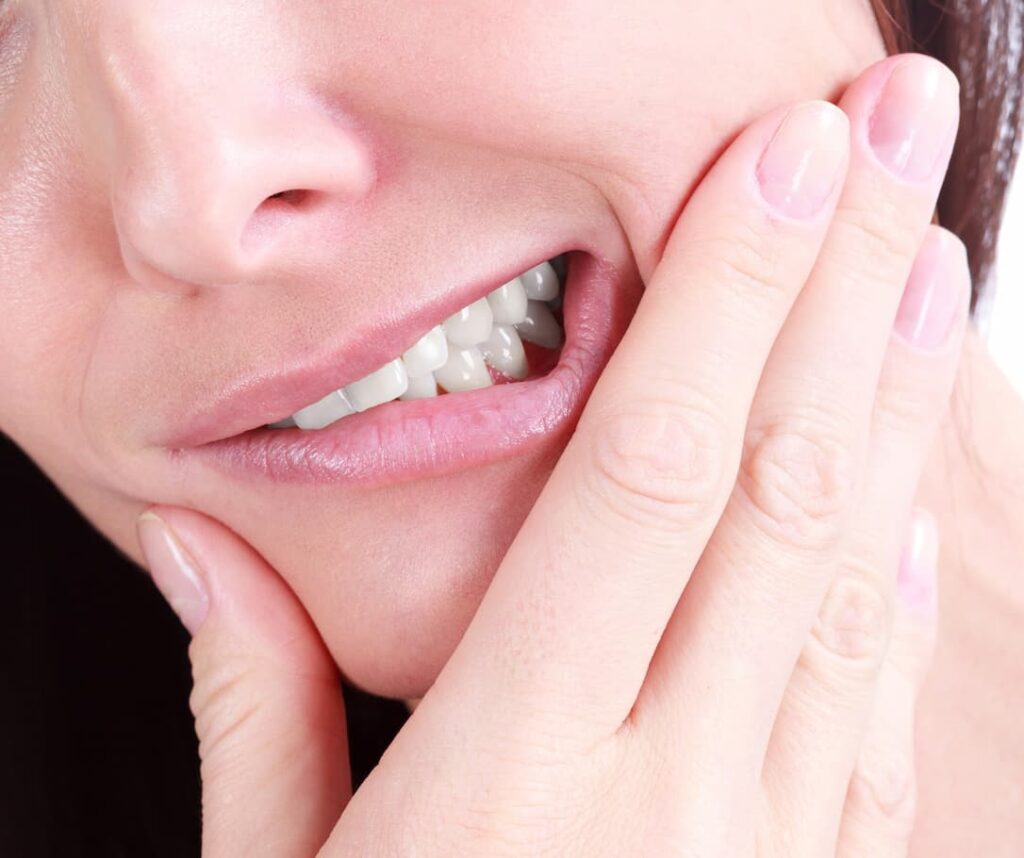
If you’re experiencing persistent discomfort, pressure, or outright pain around a healed implant, something is wrong. The pain might be dull and aching. It might be sharp when you bite down. It might be throbbing. Whatever the character of the pain, the message is the same: there’s a problem that needs diagnosis.
Pain around implants can indicate several issues. Active infection (peri-implantitis). Excessive force on the implant from bite problems. The implant pressing on a nerve. Bone loss causing implant mobility. A loose or fractured crown. All of these require professional evaluation, and none of them resolve on their own.
Swelling or Redness of the Gums
The gum tissue around healthy implants is pale pink, firm, and tightly adapted to the implant and crown. If you’re seeing redness, puffiness, or gums that look inflamed, that’s active infection. The tissue is responding to bacterial presence by increasing blood flow to the area (causing redness) and accumulating fluid (causing swelling).
Check your implant sites regularly in good lighting. Compare how the gums look around your implants to how they look around your natural teeth. If there’s obvious difference – more redness, more swelling, tissue that looks angry rather than healthy – that requires attention.
Some patients notice the gums around their implants become more swollen at certain times – after eating particular foods, after skipping flossing for a few days, during periods of stress when immune function is compromised. These pattern variations are meaningful. They indicate the tissue is right on the edge of health, responding to minor challenges that shouldn’t cause problems if everything was truly stable.
Changes in Your Bite
If your bite suddenly feels different – if teeth are hitting differently than they used to, if you’re aware of the implant crown when you close your teeth together, if you find yourself clenching or grinding more than usual – that’s a sign something has shifted. Either the implant itself has moved slightly (indicating bone loss), or the crown has become loose, or the opposing teeth have shifted position.
Your bite is remarkably sensitive. Your brain can detect changes as small as 10 microns (thinner than a human hair). When something feels off, trust that sensation. Don’t convince yourself you’re imagining it or that you’ll adjust. Your mouth is telling you something has changed, and changes in a previously stable bite mean problems have developed that need addressing.
Implant Mobility
This is the most obvious sign of serious problems, and if you notice it, you need to see your dentist immediately – we’re talking same day or next day, not “when you get around to it.”
Integrated implants do not move. At all. They’re fused to bone and should be as solid as natural tooth roots. If you can push on your implant crown and feel any movement, or if you notice the crown shifting when you chew, one of three things is happening: the crown has become loose from the implant (mechanical failure of the connection), the implant has lost enough bone support that it’s becoming mobile (advanced peri-implantitis), or the implant never integrated properly in the first place.
Any of these scenarios requires immediate professional attention. A loose crown can usually be tightened or recemented. But an implant that’s moving because of bone loss is in danger of complete failure, and the longer you wait, the more bone you lose and the more complicated the eventual treatment becomes.
Bad Taste or Odor
If you’re noticing a persistent bad taste or odor that seems to come from around your implant, that’s often a sign of active infection. The bacteria produce sulfur compounds as metabolic byproducts, and these compounds create distinctive unpleasant tastes and smells.
Patients sometimes describe tasting “something metallic” or noticing an odor that doesn’t go away with brushing. This isn’t about general bad breath from poor oral hygiene overall – this is a localized problem specifically around the implant site. The taste or smell might be constant, or it might be more noticeable after eating or when pressing on the gum tissue around the implant.
Visible Pus or Discharge
This is an unmistakable sign of active infection. If you see pus or any kind of discharge coming from around your implant – whether it appears spontaneously or when you press on the gum tissue – you have an abscess. The infection has progressed to the point where your body is actively fighting it, and the pus is the byproduct of that immune response.
Abscesses don’t resolve without intervention. The infection needs to be cleaned out, the bacteria need to be eliminated, and the underlying cause needs to be addressed. Waiting or hoping it will get better on its own only allows more bone destruction to occur while the infection persists.
Gum Recession Around the Implant
Some gum recession around implants can be normal, especially in the first year after crown placement as tissues remodel and settle. But progressive recession – where the gum line keeps moving lower month after month, exposing more of the implant or crown – indicates bone loss underneath. As bone recedes, the gum tissue follows it.
Track your gum line position. If you notice that more implant or crown is visible now than was visible six months ago, bone loss is likely occurring. Early detection of this recession allows intervention before the bone loss becomes severe enough to compromise implant stability.
Why Implants Fail Years After Successful Surgery
This is what confuses patients most: their implants were fine for years, and suddenly there are problems. They followed the instructions. They went to their cleaning appointments. Everything seemed stable. So why are they dealing with complications 5, 10, or even 15 years later?
Understanding the causes of late-stage implant failure helps you prevent them, so let’s break down the most common culprits:
Inadequate Home Care Over Time
Here’s an uncomfortable truth: most people get less diligent about oral hygiene as time passes. In the first year after getting implants, patients are meticulous. They floss daily. They use special brushes. They’re hyper-aware of their implants and invested in their success.
Five years later? The routine has slipped. They skip flossing some nights. They rush through brushing. The implants have become so comfortable and natural-feeling that patients forget they require the same attention as natural teeth – actually more attention, because implants are more susceptible to bacterial damage.
Plaque and bacteria accumulate just as readily on implant crowns as on natural teeth. Without consistent daily removal, this bacterial load triggers the inflammatory cascade that leads to peri-implantitis. It’s not dramatic. It’s gradual. But year after year of less-than-optimal cleaning creates conditions for infection to establish.
Skipped Professional Cleanings
Professional cleanings aren’t just about making your teeth look nice. They’re about removing calculus (hardened plaque) and bacteria from areas you can’t access at home, particularly below the gum line around implants. When patients skip cleanings – even just occasionally, pushing appointments from 6 months to 9 months to a year – bacteria accumulate in these critical areas.
I’ve seen this pattern repeatedly: patient has implants placed, maintains regular 6-month cleanings for the first few years, then life gets busy and appointments get postponed. Three years of sporadic cleanings later, we’re diagnosing peri-implantitis that could have been prevented with consistent professional maintenance.
The professional cleaning protocol for implants is specific. We use specialized instruments that won’t scratch the implant surface (metal scalers can damage titanium, creating rough areas where bacteria colonize more easily). We measure pocket depths around implants. We evaluate bone levels radiographically. These evaluations catch problems early, when they’re still treatable with conservative measures.
Biomechanical Overload (Force Problems)
Your bite generates substantial forces – hundreds of pounds per square inch when chewing tough foods. These forces need to be distributed properly across your teeth and implants. When the distribution is wrong – when one implant or tooth is taking more force than it should – that excessive load causes problems over time.
Biomechanical overload manifests in several ways. The bone around the overloaded implant experiences more stress than it can remodel properly, leading to bone loss. The implant components (the screw connecting the crown to the implant, or the internal connection mechanism) can loosen or fracture. The crown itself can crack or break.
What causes biomechanical overload? Teeth grinding or clenching (bruxism), which many patients do unconsciously during sleep. Changes in your bite as natural teeth shift position or wear down over years. An implant crown that was made slightly too high initially, taking premature contact. Loss of other teeth that changes how forces distribute across remaining teeth and implants.
The insidious thing about biomechanical problems is that they’re not always obvious. You might not realize you’re grinding your teeth at night. You might not notice that your bite has gradually changed. But the implant experiences this excessive force constantly, and over months and years, the cumulative damage becomes significant.
Systemic Health Changes
Your overall health affects implant longevity more than most people realize. Conditions that develop or worsen years after implant placement can compromise the bone and soft tissue supporting your implants.
Uncontrolled diabetes affects wound healing and increases infection susceptibility. Patients whose diabetes was well-managed when their implants were placed might develop poorer glucose control later, creating conditions where peri-implantitis can establish more easily.
Osteoporosis and medications for osteoporosis (particularly bisphosphonates and denosumab) affect bone metabolism. These medications reduce bone turnover, which generally helps maintain bone density but can complicate healing if implant surgery or bone grafting becomes necessary to address problems.
Autoimmune conditions, cancer treatments, and immunosuppressive medications all compromise your body’s ability to fight infection and maintain healthy tissue around implants. If you develop these conditions years after getting implants, your risk profile changes.
Smoking is particularly destructive. Patients who quit smoking for implant placement sometimes resume the habit years later. Smoking constricts blood vessels, reducing blood supply to the gums and bone. It impairs immune function. It creates chemical environments that favor bacterial growth. The research is unambiguous: smokers have significantly higher peri-implantitis rates and implant failure rates than non-smokers.
The Crown or Prosthetic Needs Replacement
Dental crowns and prosthetics aren’t lifetime devices. They wear down. Margins can open up where the crown meets the implant, creating spaces where bacteria accumulate. The cement holding the crown (if it’s a cemented restoration) can wash out gradually over years, allowing microleakage and bacterial invasion.
Most implant crowns need replacement or at least evaluation every 10 to 15 years. The implant itself might be completely stable and healthy, but the crown has reached the end of its functional lifespan. Patients sometimes interpret problems with the crown as problems with the implant and panic unnecessarily, when actually we just need to fabricate a new crown on the existing, healthy implant.
Advanced Signs of Implant Failure
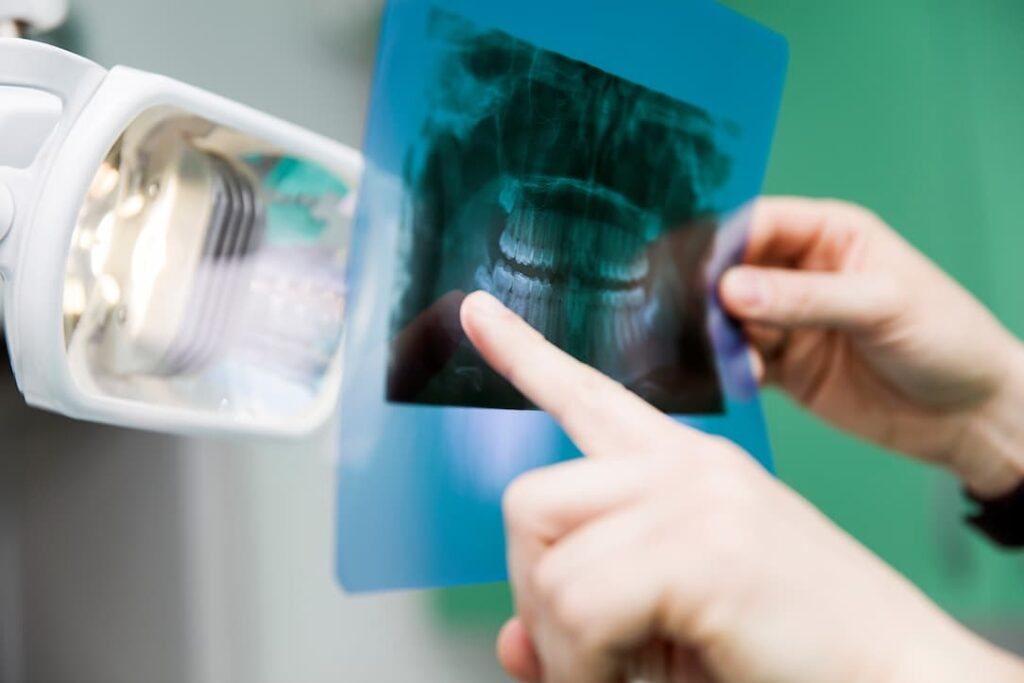
When early warning signs are missed or ignored, implant problems progress to more serious stages. These advanced signs indicate significant damage has occurred:
Bone Loss Visible on X-rays
The bone around healthy implants maintains consistent height and density on radiographs. When we compare your current X-rays to previous ones and see bone loss – the bone level has dropped, or the bone appears less dense – that’s objective evidence of ongoing destruction.
Some bone loss in the first year after implant placement is normal as the bone remodels. But progressive bone loss years after integration, especially bone loss that continues from one cleaning appointment to the next, indicates active peri-implantitis that’s not being controlled.
We measure bone loss carefully. Loss of 2 millimeters or more from the initial post-healing level is clinically significant. Beyond 3 to 4 millimeters of loss, we’re approaching the threshold where implant stability becomes compromised and more aggressive intervention is necessary.
Deep Pockets Around the Implant
During your cleaning appointments, we probe around implants with a specialized instrument, measuring the depth of the pocket between the gum and the implant. Healthy pockets are 3 millimeters or less. Pockets of 4 to 5 millimeters indicate peri-implant mucositis. Pockets 6 millimeters or deeper indicate peri-implantitis with bone loss.
Deep pockets are problematic because they’re impossible to clean effectively at home. The bacteria in these deep pockets are protected from your toothbrush and floss. They establish themselves in an environment where oxygen levels are low, favoring the anaerobic species that are most destructive to bone. Without professional intervention to clean these pockets and reduce their depth, the infection persists and bone loss continues.
Implant Threads Becoming Visible
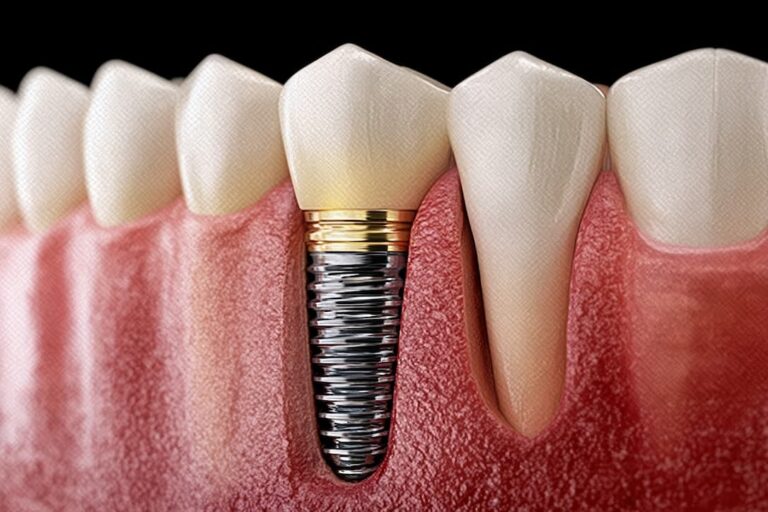
Implants have threaded surfaces that should be completely covered by bone and gum tissue. If you can see threads – either visibly when you look in the mirror, or your tongue can feel rough texture on the implant surface – that’s significant bone loss. The bone that once covered those threads has been destroyed, exposing the implant surface.
Once implant threads are exposed, the surface is rough and retentive for bacteria. These exposed areas become sites of persistent infection that are difficult to clean and even more difficult to treat. The progression accelerates because the rough exposed surface harbors bacteria that continue destroying remaining bone.
Implant Fracture
This is rare but catastrophic when it occurs. Implants can fracture from extreme forces (severe grinding, traumatic injury), from metal fatigue after years of cyclic loading, or from excessive force concentrated on implants that have lost bone support. When an implant fractures, it requires removal. There’s no repairing a fractured implant.
Sometimes the fracture is obvious – you feel sudden pain, notice mobility, see part of the implant or crown displaced. Other times it’s subtle, creating a crack that slowly propagates. Radiographs can detect these fractures, which is another reason regular imaging is important for long-term implant monitoring.
How We Diagnose Implant Problems
When you come in with concerns about your implant, or when we detect concerning signs during routine maintenance, here’s how we thoroughly evaluate what’s happening:
Clinical Examination
We start with visual inspection and palpation. Looking at tissue color, contour, and signs of inflammation. Checking for bleeding on gentle probing. Testing for mobility by applying light pressure to the crown. Evaluating the bite relationship and looking for signs of excessive wear or crown damage.
We probe around the entire circumference of the implant, measuring pocket depths at six points. Healthy implants should have minimal depth (3 millimeters or less) and no bleeding on probing. Deep pockets, bleeding, or pus discharge during probing indicates active disease.
Radiographic Analysis
Periapical X-rays or panoramic radiographs show bone levels around implants. We’re looking at bone height, bone density, and any signs of radiolucency (dark areas) that indicate bone loss or infection. Comparing current radiographs to previous ones shows whether bone loss is progressing, stable, or improving with treatment.
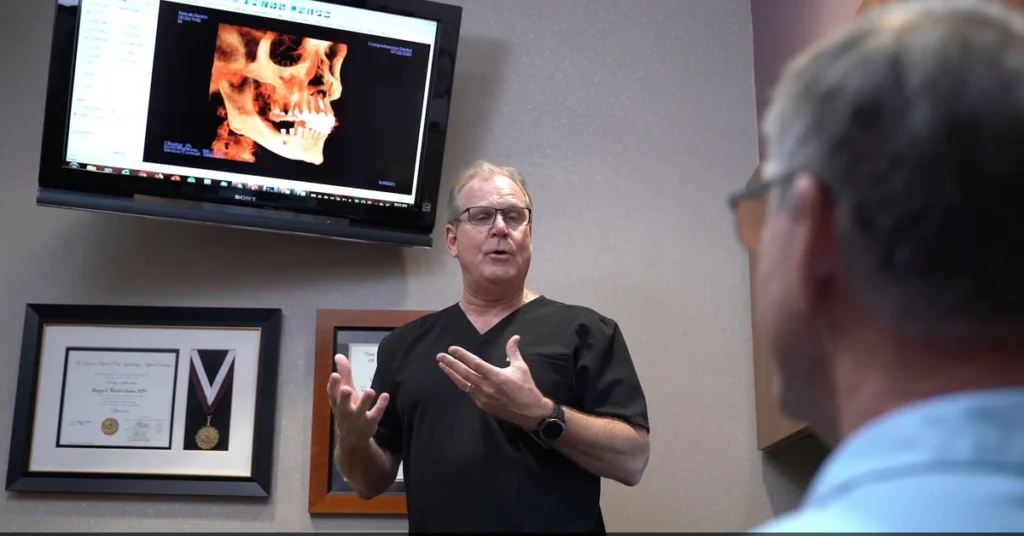
3D CBCT imaging provides more detailed information when we need to assess complex cases. The three-dimensional view shows bone loss around all surfaces of the implant, helps us evaluate anatomical structures, and guides treatment planning for surgical interventions.
Microbiological Testing
In some cases, we take bacterial samples from around infected implants. These samples can be analyzed to identify the specific bacterial species present and their antibiotic sensitivities. This information helps us select the most effective antibiotics if systemic antibiotic therapy is indicated as part of treatment.
For patients with multiple failing implants or particularly aggressive infections, microbiological testing provides valuable information that guides more targeted treatment.
Occlusal Analysis
We evaluate your bite in detail, using articulating paper to mark contact points, examining wear patterns on teeth and restorations, and sometimes taking photos or digital scans to document how your teeth come together. If biomechanical overload is suspected, this analysis identifies which teeth or implants are experiencing excessive force.
For patients who grind or clench, we might recommend wearing a bite guard at night while we monitor the implant situation. If grinding is causing or contributing to implant problems, managing the grinding is essential to preventing future complications.
Treatment Options When Problems Are Detected
The good news: most implant problems are treatable if caught early. The treatment approach depends on how far the disease has progressed and what’s causing the problem.
For Early-Stage Peri-Implant Mucositis
When we catch inflammation before bone loss has occurred, treatment is straightforward: professional cleaning to remove plaque and calculus, improved home care protocols, and more frequent monitoring. We use specialized plastic or carbon fiber instruments that won’t damage the implant surface. Antimicrobial rinses like chlorhexidine might be prescribed for short-term use to reduce bacterial load.
At this stage, the tissue can return to complete health. The inflammation is reversible. We’ll see you back in 4 to 6 weeks to verify that pocket depths have decreased, bleeding has stopped, and tissue appearance has normalized. If you maintain good home care and regular professional cleanings, the problem shouldn’t recur.
For Established Peri-Implantitis
Once bone loss has occurred, treatment becomes more involved. Non-surgical therapy is still the first line approach: we perform meticulous cleaning of the implant surface using specialized instruments and techniques. Ultrasonic devices with plastic tips, air-powder abrasive systems that use glycine powder, and laser therapy all help remove bacterial biofilm from implant surfaces without damaging the titanium.
Local antibiotic delivery systems can be placed directly into infected pockets. These systems release antibiotics in high concentrations right where they’re needed, killing bacteria more effectively than systemic antibiotics while minimizing side effects.
For moderate to advanced peri-implantitis with significant bone loss, surgical intervention becomes necessary. We create surgical access to the infected area, thoroughly clean all contaminated surfaces, remove diseased tissue, and in some cases perform bone grafting to regenerate lost bone around the implant. These procedures require healing time but offer the best chance of stabilizing the implant and preventing further deterioration.
For Biomechanical Problems
If excessive force is causing problems, we need to eliminate or reduce that force. This might involve adjusting the bite by reshaping the implant crown, replacing the crown with one that has better contours and contacts, or fabricating a night guard to protect against grinding forces during sleep.
For patients with severe bruxism, sometimes the best solution is replacing the existing crown with a more force-resistant material, or designing the restoration to intentionally have less aggressive contacts so it takes lighter forces during function.
When Implant Removal Becomes Necessary
I’m not going to sugarcoat this: sometimes implants can’t be saved. When bone loss is too extensive, when infection can’t be controlled despite aggressive treatment, or when the implant has fractured, removal is the appropriate course of action.
If you’ve received a diagnosis suggesting removal or significant intervention, getting a dental implant second opinion is a reasonable and often advisable step before committing to a treatment plan. I’m not going to sugarcoat this: sometimes implants can’t be saved.
Implant removal is a surgical procedure. We carefully remove the failed implant, thoroughly clean the site of infection, and often place bone graft material to preserve the site for potential future implant placement. After adequate healing (typically 4 to 6 months), we can often place a new implant if sufficient bone remains and the infection has been completely resolved.
Losing an implant is disappointing, but it’s not the end of your tooth replacement options. We evaluate what caused the failure, address those factors, and develop a plan that gives the replacement implant the best chance of long-term success.
Prevention Strategies: Protecting Your Investment

Everything we’ve discussed about failure signs and treatment underscores one critical truth: prevention is far better than intervention. Here’s your roadmap for keeping your implants healthy for decades:
Daily Home Care (Non-Negotiable)
Your implants need cleaning twice daily, every day, for the rest of your life. This isn’t optional or “most of the time.” It’s mandatory if you want to avoid complications.
Brushing technique matters. Use a soft-bristled brush. Angle it toward the gum line around your implant crowns. Spend adequate time – two minutes minimum, making sure you’re reaching all surfaces around each implant. Electric toothbrushes are excellent for implants if used correctly.
Flossing is critical. Standard floss works fine for most implant crowns. For implant-supported bridges or areas that are hard to access, floss threaders or interdental brushes (the tiny bottle-brush style cleaners) work better. The goal is removing plaque from around the entire implant, especially below the gum line where bacteria accumulate.
Water flossers are useful additions but shouldn’t replace mechanical flossing. They rinse away loose debris and food particles but don’t remove adherent plaque as effectively as actual floss. Use both for optimal results.
Professional Maintenance (Every 3-6 Months)
This is where patients often fail long-term. They’re diligent about appointments in the first few years, then start spacing them out. Don’t do this. Your cleaning interval should be determined by your individual risk factors, but for most patients with implants, 6 months is the maximum interval between professional cleanings.
For patients with history of gum disease, diabetes, smoking, or any previous implant complications, 3 to 4 month intervals are more appropriate. The professional cleaning removes calculus you can’t remove at home, allows us to evaluate bone levels and tissue health, and catches problems early when they’re simple to treat.
These appointments should include probing around your implants and periodic radiographs (typically yearly for the first few years, then every 2 to 3 years if everything remains stable).
Protect Against Excessive Forces
If you grind or clench your teeth, wear your night guard. Every night. I know they’re uncomfortable initially. I know you feel like you can’t get used to them. But grinding forces are incredibly destructive to implants over time, and a night guard is the simplest way to protect your investment.
Avoid using your implant crowns as tools. Don’t bite thread, open packages, crack nuts, or chew ice. These excessive forces can fracture crowns, loosen components, or damage the bone around implants.
Manage Your Systemic Health
Your implant health is connected to your overall health. If you have diabetes, work with your physician to maintain good glucose control. If you smoke, quit – there’s no way around this. Smoking dramatically increases your risk of peri-implantitis and implant failure.
When you’re prescribed new medications, inform your dentist. Some medications affect bone metabolism or immune function in ways that influence implant health. We might need to adjust your monitoring or maintenance protocols based on health changes.
Respond to Warning Signs Immediately
This bears repeating because it’s so critical: when you notice any of the warning signs we discussed – bleeding, discomfort, swelling, changes in your bite, unusual taste or odor – contact your dentist promptly. Same week, not same month. Early problems are simple problems. Delayed problems become complex problems.
Don’t convince yourself it’s nothing. Don’t wait to see if it gets better on its own. Your implants won’t heal themselves. The earlier we intervene, the simpler the treatment and the better the outcome.
The Long-Term Reality of Living with Implants
Here’s what I want you to understand: dental implants are the best tooth replacement option we have. The success rates are excellent. Patient satisfaction is extremely high. But they’re not maintenance-free, and they’re not immune to problems.
Think of implants like a high-quality car. With proper maintenance – regular oil changes, tire rotations, scheduled service – that car will run reliably for hundreds of thousands of miles. Skip the maintenance, ignore warning lights, drive it hard without care, and you’ll have problems that could have been prevented.
Your implants are the same. Daily cleaning is your oil change. Professional maintenance is your scheduled service. Paying attention to warning signs is watching your dashboard for check engine lights. When you maintain them properly and address small issues before they become big ones, implants can function successfully for the rest of your life.
But this requires partnership between you and your dental team. We can provide excellent surgical placement and meticulous maintenance, but we can’t control what happens the other 364 days a year when you’re managing your own oral care. Your daily habits, your consistency with appointments, and your responsiveness to problems all determine long-term success as much as the quality of the original surgery.
What to Do Right Now
If you have dental implants and you’re reading this article, here’s your action plan:
First, honestly evaluate your current home care. Are you flossing around your implants daily? Are you spending adequate time brushing? If not, recommit to proper daily cleaning starting today. Set phone reminders if necessary. Make it non-negotiable.
Second, check when your last professional cleaning was. If it’s been more than 6 months, schedule an appointment this week. If you’ve been skipping appointments or postponing them, get back on a regular schedule.
Third, do a self-examination. Look at your implant sites in good lighting. Check for redness, swelling, or recession. Gently probe around the implants with your finger – is there bleeding? Discomfort? Any of the warning signs we discussed? If yes, call your dentist tomorrow morning.
Fourth, if you haven’t had X-rays of your implants in over a year, ask about getting updated radiographs at your next cleaning. We need baseline comparisons to detect bone loss, and regular imaging is part of proper long-term monitoring.
If you’re experiencing any symptoms around your implants – any of the warning signs we covered – don’t wait. Call Comprehensive Dental Care in Henderson or Las Vegas today. The earlier we evaluate and address problems, the simpler the treatment and the better your outcome will be.
Your implants represent a significant investment in your health, function, and quality of life. Protecting that investment requires ongoing attention, but the alternative – dealing with implant failure and the complex treatments it requires – is far more involved than consistent maintenance ever will be.
Your mouth is the gateway to your body. Problems with implants don’t stay localized – they affect your nutrition, your confidence, your overall health, and your daily comfort. Catching problems early keeps them small and manageable. Ignoring problems allows them to become serious and potentially irreversible.
You know what to watch for now. You understand why these problems develop. You know what actions to take when you notice concerning signs. Use this knowledge to protect your implants and maintain the healthy, functional smile you invested in achieving.
If you have questions about your specific situation, or if you’d like a comprehensive evaluation of your implant health, contact Comprehensive Dental Care today. We’ll give you a thorough assessment, honest information about what we’re seeing, and clear recommendations for maintaining optimal implant health for years to come.
Your implants can last a lifetime. But only if you protect them. Start today.
Frequently Asked Questions: Dental Implant Failure Signs
What are the earliest warning signs of dental implant failure?
Early signs include bleeding around the implant, gum redness or swelling, persistent discomfort, or a change in how your bite feels. These symptoms indicate inflammation or early peri-implant mucositis, which is fully treatable when caught quickly.
Can dental implants fail even years after successful surgery?
Yes. Implants may fail years later due to changes in home care habits, skipped professional cleanings, biomechanical overload, systemic health changes, or deterioration of the implant crown. These long-term factors can create conditions that allow infection or bone loss to develop gradually.
What is peri-implantitis and why is it so serious?
Peri-implantitis is an infection that destroys the bone and gum tissue surrounding a dental implant. Unlike gum disease around natural teeth, it progresses faster because implants lack periodontal ligaments that help protect against bacteria. Untreated peri-implantitis can lead to implant loosening or complete implant failure.
How can my dentist diagnose implant problems?
Diagnosis involves a combination of clinical examination, probing pocket depths, checking for mobility, reviewing X-rays for bone loss, and evaluating bite forces. In more complex cases, microbiological testing or 3D CBCT imaging may be used to identify infection and bone changes.
Are early-stage implant problems reversible?
Yes. Early inflammation without bone loss (peri-implant mucositis) is completely reversible with professional cleaning, improved home care, and sometimes antimicrobial treatment. The key is early detection and prompt dental evaluation.
How can I prevent implant failure long-term?
Prevention includes daily brushing and flossing around implants, professional cleanings every 3–6 months, managing overall health conditions like diabetes, wearing a night guard if you grind your teeth, and responding quickly to any bleeding, swelling, or discomfort around your implant sites.