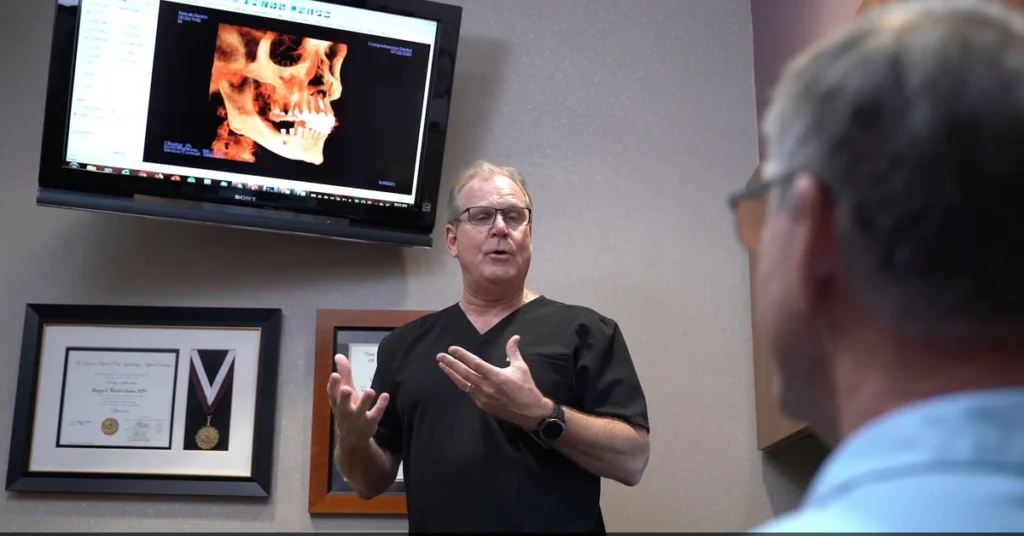
Three years ago, I met a patient, whom we’ll call Robert, whose story changed how I talk about implant dentist selection. He came to our Nevada practice after a failed implant procedure that left him with chronic pain, bone loss, and a $25,000 lesson in why choosing the right implant dentist matters more than anything else.
“I went with the cheapest option,” Robert told me during his consultation. “The dentist seemed nice enough, but I never asked about his training or experience. I figured all dentists could do implants.”
That assumption cost him dearly. What should have been a straightforward single implant became a complex reconstruction requiring bone grafting, infection treatment, and months of additional healing. More importantly, it shook his confidence in dental treatment entirely.
As someone who has placed thousands of successful implants over two decades, I see patients like Robert more often than I’d like. The good news? With the right information, you can avoid his mistakes and find an implant dentist who will transform your smile safely and predictably.
The Misconceptions That Lead to Poor Choices
Here’s what most people get wrong about selecting an implant dentist: they focus on the wrong factors entirely.
Misconception 1: All dentists are equally qualified to place implants
This couldn’t be further from the truth. While any licensed dentist can legally place implants, the training and experience levels vary dramatically. Some have completed extensive residencies and placed thousands of implants. Others may have attended a weekend course and placed only a handful.
I learned this the hard way early in my career. Fresh out of dental school, I was eager to offer implant services but quickly realized my basic education wasn’t enough. That’s why I pursued additional training, completed specialized residencies, and committed to ongoing education. The difference in outcomes was immediately apparent.
Misconception 2: Price should be your primary consideration
Robert’s experience illustrates why this thinking is dangerous. The “cheapest” implant often becomes the most expensive when complications arise. A skilled implant dentist may charge more upfront, but their experience typically results in better outcomes, fewer complications, and long-term success.
Misconception 3: Technology matters more than expertise
While advanced technology certainly helps, it’s not a substitute for skill and experience. I’ve seen dentists with the latest equipment produce poor results because they lacked proper training. Conversely, experienced implant dentists can achieve excellent outcomes with basic equipment when necessary.
The key insight? Choosing an implant dentist requires looking beyond surface-level factors to understand their actual qualifications, experience, and track record.
Essential Qualifications Every Implant Dentist Should Have
What makes a truly qualified implant dentist? Based on my experience and industry standards, here are the non-negotiable qualifications you should verify:
Advanced Training Beyond Dental School
Basic dental education includes minimal implant training – often just theoretical knowledge with limited hands-on experience. Look for dentists who have completed:
- Postgraduate residencies in oral surgery, periodontics, or prosthodontics. These programs provide extensive implant training over 2-4 years.
- Fellowship programs specifically focused on implant dentistry. These intensive programs combine advanced surgical and restorative techniques.
- Continuing education courses from reputable organizations. The field evolves rapidly, and ongoing learning is essential.
When I evaluate a colleague’s qualifications, I look for evidence of serious commitment to implant education. Weekend courses aren’t sufficient for complex cases, though they may supplement extensive training.
Substantial Clinical Experience
Training provides the foundation, but experience builds expertise. Key experience indicators include:
- Number of implants placed – I’ve placed hundreds of implants during my career. While numbers aren’t everything, they indicate exposure to various cases and complications.
- Years of implant practice – Implant dentistry requires pattern recognition that only comes with time. Look for dentists with at least 5-10 years of focused implant experience.
- Case complexity – Can they handle only simple cases, or do they manage complex reconstructions, bone grafting, and full-arch restorations?
- Complication management – Experienced implant dentists know how to prevent problems and manage them when they occur.
Hospital Privileges and Board Certifications
While not always required, these credentials indicate additional scrutiny and standards:
- Hospital privileges for oral surgery procedures suggest peer review and additional credentialing.
- Board certification in relevant specialties demonstrates mastery of advanced techniques.
- Professional memberships in organizations like the International Congress of Oral Implantologists show commitment to the field.
Technology Proficiency
Modern implant dentistry benefits significantly from advanced technology when used by skilled practitioners:
- 3D imaging capabilities for precise treatment planning and implant placement.
- Computer-guided surgery systems for enhanced accuracy, especially in complex cases.
- Digital workflows for efficient treatment and better patient communication.
- Advanced materials knowledge including different implant systems and restoration options.
The key is finding dentists who leverage technology to enhance their clinical skills, not replace them.
Red Flags That Signal Poor Implant Dentist Choices
Through years of treating patients who received poor implant care elsewhere, I’ve identified consistent warning signs. Avoid implant dentists who exhibit these red flags:
Unrealistic Promises and Guarantees
- “100% success rate” claims should raise immediate suspicions. Even the most skilled implant dentists experience occasional failures. Honest practitioners discuss realistic success rates (typically 90-98%) and potential complications.
- “Cheapest prices guaranteed” often indicates corners being cut somewhere – materials, time, or expertise.
- “Anyone can get implants” ignores important medical and anatomical factors that affect candidacy.
I always discuss realistic expectations with patients. Some cases are straightforward with predictable outcomes. Others involve higher risk factors that require careful consideration and informed consent.
Inadequate Consultation and Planning
- Rushed consultations that don’t thoroughly evaluate your medical history, examine your mouth, and discuss treatment options comprehensively.
- No 3D imaging for implant planning. Modern implant dentistry requires detailed imaging to assess bone quality, quantity, and anatomical structures.
- Generic treatment plans that don’t address your specific needs, anatomy, and goals.
- Pressure to decide immediately without time to consider options or seek second opinions.
Quality implant dentists invest significant time in consultation and planning. My initial consultations typically last 60-90 minutes because proper evaluation cannot be rushed.
Poor Communication and Unprofessional Behavior
- Inability to explain procedures clearly in terms you understand. If a dentist can’t communicate effectively about treatment, how will they handle complications?
- Dismissive attitude toward your questions or concerns. Your comfort and understanding should be priorities.
- Inadequate informed consent that doesn’t fully explain risks, benefits, alternatives, and expected outcomes.
- Poor office organization often reflects on clinical care quality as well.
Limited Treatment Options
- One-size-fits-all approaches that don’t consider individual needs and preferences.
- Inability to handle complications or refer appropriately when cases exceed their expertise.
- No collaboration with specialists when complex cases require team approaches.
- Outdated techniques that don’t reflect current standards of care.
Questions Every Patient Should Ask Their Implant Dentist
During your consultation, these questions will reveal crucial information about your implant dentist’s qualifications and approach:
Training and Experience Questions
- “What specific training have you completed in implant dentistry?” Look for detailed answers about residencies, fellowships, and ongoing education.
- “How many implants do you place annually?” Active implant dentists typically place hundreds of implants yearly.
- “What types of cases do you handle?” Ensure their experience matches your needs – simple single implants versus complex full-arch reconstructions require different expertise levels.
- “How do you handle complications?” Understanding their complication management protocols reveals experience and honesty.
Technology and Techniques Questions
- “What imaging do you use for implant planning?” 3D CBCT scans should be standard for implant treatment planning.
- “Do you use computer-guided surgery?” While not always necessary, this technology enhances precision in many cases.
- “What implant systems do you use and why?” Experienced practitioners can explain their system preferences based on clinical outcomes.
Treatment Planning Questions
- “What are my treatment options?” Multiple approaches often exist, and good practitioners present alternatives.
- “What are the risks and potential complications?” Honest discussion of risks indicates professional integrity.
- “What happens if treatment doesn’t go as planned?” Understanding revision policies and additional costs upfront prevents surprises.
- “Can I see examples of similar cases?” Before and after photos demonstrate experience with cases like yours.
Practical Questions
- “What are the total costs involved?” Comprehensive cost breakdowns including potential additional procedures prevent financial surprises.
- “What post-operative care do you provide?” Ongoing care relationships are crucial for long-term implant success.
- “Do you handle your own emergencies?” Access to your treating dentist for complications is important.
Making the Right Choice for Your Implant Treatment
After evaluating multiple implant dentists, how do you make the final decision? Here’s my framework for choosing the right practitioner:
Prioritize Qualifications and Experience
- Extensive training should be your primary criterion. Advanced education and ongoing learning demonstrate commitment to excellence.
- Relevant experience with cases similar to yours ensures familiarity with potential challenges and solutions.
- Track record of successful outcomes and satisfied patients provides confidence in their abilities.
Evaluate Communication and Comfort
- Clear communication about procedures, risks, and expectations builds trust and ensures informed decisions.
- Comfortable office environment and professional staff reflect overall practice quality.
- Unhurried consultations that address all your questions and concerns thoroughly.
Consider Technology and Facilities
- Modern equipment and techniques often improve outcomes and comfort, but shouldn’t overshadow fundamental qualifications.
- Proper facilities for handling emergencies and complications provide safety nets.
- Collaborative relationships with specialists when needed for complex cases.
Assess Value Rather Than Just Price
- Comprehensive treatment planning that addresses all aspects of your case may cost more initially but prevents problems later.
- Quality materials and techniques typically justify higher fees through better outcomes and longevity.
- Ongoing care relationships that support long-term implant success add significant value.
Trust Your Instincts
- Professional confidence without arrogance indicates competence and experience.
- Genuine concern for your wellbeing rather than just financial gain.
- Transparency about limitations and when referrals might be appropriate.
Your Path to Successful Implant Treatment
Choosing the right implant dentist is arguably the most important decision in your entire treatment process. The difference between an excellent implant dentist and a poor one can mean the difference between decades of successful function and years of complications, revisions, and disappointment.
Robert’s story had a happy ending. After proper treatment with an experienced implant dentist, his implant has functioned perfectly for three years. He often tells people that his biggest regret wasn’t the failed implant – it was not doing proper research the first time.
Don’t make Robert’s mistake. Take time to evaluate implant dentists thoroughly. Ask detailed questions about training and experience. Verify credentials and review patient testimonials. Consider the total value rather than just initial costs.
Your smile deserves the expertise of a truly qualified implant dentist. When you find the right practitioner, implant treatment becomes a predictable path to restored function and confidence rather than a risky gamble with your oral health.
Ready to find the right implant dentist for your needs? Start with a comprehensive consultation that addresses all the factors we’ve discussed. A qualified implant dentist will welcome your questions and provide detailed information about their qualifications, experience, and approach to your specific case.
Your journey to a restored smile begins with choosing the right guide. Make sure that guide has the training, experience, and commitment to excellence that your smile deserves.
Finding an Implant Dentist FAQs
How do you choose an implant dentist?
Start by verifying training beyond dental school — look for postgraduate residencies, fellowship programs, and a focus on implant dentistry specifically. Then evaluate clinical volume (how many implants they place annually), years of experience, and whether they use 3D imaging for treatment planning. Price should never be the primary factor; the cost of a failed implant far exceeds any upfront savings from choosing a less qualified provider.
What qualifications should an implant dentist have?
At minimum, look for postgraduate training in implant dentistry through a residency or accredited fellowship program. Board certification from organizations like the American Board of Oral Implantology (ABOI) is a strong credential — there are fewer than 500 board-certified implantologists in the U.S. Membership in professional bodies like the International Congress of Oral Implantologists (ICOI) and demonstrated continuing education also signal a serious commitment to the specialty.
What questions should I ask an implant dentist before treatment?
The most important questions are: What specific implant training have you completed? How many implants do you place each year? How do you handle complications? What imaging do you use for planning? What are the total costs, including potential bone grafting or other preparatory procedures? And: Can I see before-and-after photos of similar cases? A qualified implant dentist will answer all of these directly and without hesitation.
Is there a difference between a general dentist and an implant dentist?
Yes — a significant one. Any licensed dentist can legally place implants, but training levels vary widely. A general dentist may have attended a weekend implant course, while a specialist or dedicated implantologist has completed years of additional residency or fellowship training and placed hundreds or thousands of implants. For complex cases involving bone grafting, full-arch restoration, or prior implant failures, experience level matters enormously for outcomes.
What are red flags when choosing an implant dentist?
Watch for rushed consultations under 30 minutes, no 3D imaging for treatment planning, pressure to decide immediately, and claims of a “100% success rate.” Honest, experienced practitioners discuss realistic success rates (typically 90–98%) and potential complications openly. Unusually low prices are also a warning sign — they often indicate inferior materials, less experienced staff, or corners being cut elsewhere in the process.
Should I get a second opinion before dental implant treatment?
Yes, especially for complex or high-cost cases. A reputable implant dentist will never discourage a second opinion — in fact, confidence in their own qualifications and treatment plan means they welcome it. Second opinions are especially important if you’ve been told you need extensive bone grafting, if costs seem unusually high or low, or if you’re replacing multiple teeth or pursuing full-arch reconstruction.